

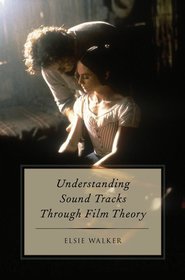
Understanding Sound Tracks Through Film Theory
- Publisher's listprice GBP 135.00
-
60 952 Ft (58 050 Ft + 5% VAT)
The price is estimated because at the time of ordering we do not know what conversion rates will apply to HUF / product currency when the book arrives. In case HUF is weaker, the price increases slightly, in case HUF is stronger, the price goes lower slightly.
- Discount 10% (cc. 6 095 Ft off)
- Discounted price 54 857 Ft (52 245 Ft + 5% VAT)
Subcribe now and take benefit of a favourable price.
Subscribe
60 952 Ft

Availability
printed on demand
Why don't you give exact delivery time?
Delivery time is estimated on our previous experiences. We give estimations only, because we order from outside Hungary, and the delivery time mainly depends on how quickly the publisher supplies the book. Faster or slower deliveries both happen, but we do our best to supply as quickly as possible.
Product details:
- Publisher OUP USA
- Date of Publication 2 April 2015
- ISBN 9780199896301
- Binding Hardback
- No. of pages450 pages
- Size 183x257x30 mm
- Weight 975 g
- Language English 0
Categories
Short description:
Understanding Sound Tracks Through Film Theory analyzes all aural aspects of cinema using several approaches: feminism, genre studies, post-colonialism, psychoanalysis, and queer theory. In her analysis of each sound track, Walker brings together film studies, musicology, history, politics, and culture in an accessible yet rigorous way.
MoreLong description:
Until recently, most scholars neglected the power of hearing cinema as well as seeing it. Understanding Sound Tracks Through Film Theory breaks new ground by redirecting the arguments of foundational texts within film theory to film sound tracks. The book includes sustained analyses of particular films according to a range of theoretical approaches: psychoanalysis, feminism, genre studies, post-colonialism, and queer theory. The films come from disparate temporal and industrial contexts: from Classical Hollywood Gothic melodrama (Rebecca (1940)), to contemporary, critically-acclaimed science fiction (Gravity (2013)). Along with sound tracks from canonical American films, such as The Searchers (1956) and To Have and Have Not (1944), Walker analyzes independent Australasian films: examples include Heavenly Creatures (1994), a New Zealand film that uses music to empower its queer female protagonists; and Ten Canoes (2006), the first Australian feature film with a script entirely in Aboriginal languages. Understanding Sound Tracks Through Film Theory thus not only calls new attention to the significance of sound tracks-it also focuses on the sonic power of characters representing those whose voices have all too often been drowned out.
Dominant studies of film music tend to be written for those who are already musically trained. Similarly, studies of film sound tend to be jargon-heavy. By contrast, Understanding Sound Tracks Through Film Theory is both rigorous and accessible to all scholars with a basic grasp of cinematic and musical structures. Moreover, the book brings together film studies, musicology, history, politics, and culture. Therefore, Understanding Sound Tracks Through Film Theory will resonate for scholars across the liberal arts, and for anyone interested in challenging the so-called "hegemony of the visual."
Elsie Walker's multifaceted approach in Understanding Sound Tracks Through Film Theory provides a rich, strategic bridging of musicology to the venerable and varied tenets of film theory. Rigorously researched, it is pioneering inquiry, crowned by a bevy of stimulating analyses.
Table of Contents:
General Introduction
Part One: Genre Studies
Part Two: Postcolonialism
Part Three: Feminism
Part Four: Psychoanalysis
Part Five: Queer Theory
Coda
Select Filmography
Further Perceiving
Select Glossary
Index

