

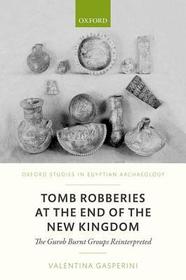
Tomb Robberies at the End of the New Kingdom
The Gurob Burnt Groups Reinterpreted
Sorozatcím: Oxford Studies in Egyptian Archaeology;
-
10% KEDVEZMÉNY?
- A kedvezmény csak az 'Értesítés a kedvenc témákról' hírlevelünk címzettjeinek rendeléseire érvényes.
- Kiadói listaár GBP 122.50
-
55 308 Ft (52 675 Ft + 5% áfa)
Az ár azért becsült, mert a rendelés pillanatában nem lehet pontosan tudni, hogy a beérkezéskor milyen lesz a forint árfolyama az adott termék eredeti devizájához képest. Ha a forint romlana, kissé többet, ha javulna, kissé kevesebbet kell majd fizetnie.
- Kedvezmény(ek) 10% (kb. 5 530 Ft)
- Kedvezményes ár 49 778 Ft (47 408 Ft + 5% áfa)
Iratkozzon fel most és részesüljön kedvezőbb árainkból!
Feliratkozom
55 308 Ft

Beszerezhetőség
Megrendelésre a kiadó utánnyomja a könyvet. Rendelhető, de a szokásosnál kicsit lassabban érkezik meg.
Why don't you give exact delivery time?
A beszerzés időigényét az eddigi tapasztalatokra alapozva adjuk meg. Azért becsült, mert a terméket külföldről hozzuk be, így a kiadó kiszolgálásának pillanatnyi gyorsaságától is függ. A megadottnál gyorsabb és lassabb szállítás is elképzelhető, de mindent megteszünk, hogy Ön a lehető leghamarabb jusson hozzá a termékhez.
A termék adatai:
- Kiadó OUP Oxford
- Megjelenés dátuma 2018. július 12.
- ISBN 9780198818786
- Kötéstípus Keménykötés
- Terjedelem338 oldal
- Méret 238x163x24 mm
- Súly 750 g
- Nyelv angol 0
Kategóriák
Rövid leírás:
This book focuses on a series of archaeological assemblages excavated at the end of the 19th century at the archaeological site of Gurob (Fayum/Egypt). More than 100 years after their discovery, all the materials are presented together for the first time and are fully studied and analysed according to a modern archaeological approach.
TöbbHosszú leírás:
At the end of the 19th century W.M.F. Petrie excavated a series of assemblages at the New Kingdom Fayum site of Gurob. These deposits, known in the Egyptological literature as 'Burnt Groups', were composed by several and varied materials (mainly Egyptian and imported pottery, faience, stone and wood vessels, jewellery), all deliberately burnt and buried in the harem palace area of the settlement. Since their discovery these deposits have been considered peculiar and unparalleled. Many scholars were challenged by them and different theories were formulated to explain these enigmatic 'Burnt Groups'.
The materials excavated from these assemblages are now curated at several Museum collections across England: Ashmolean Museum, British Museum, Manchester Museum, and Petrie Museum. For the first time since their discovery, this book presents these materials all together. Gasperini has studied and visually analysed all the items. This research sheds new light on the chronology of deposition of these assemblages, additionally a new interpretation of their nature, primary deposition, and function is presented in the conclusive chapter. The current study also gives new information on the abandonment of the Gurob settlement and adds new social perspective on a crucial phase of the ancient Egyptian history: the transition between the late New Kingdom and the early Third Intermediate Period. Beside the traditional archaeological sources, literary evidence ('The Great Tomb Robberies Papyri') is taken into account to formulate a new theory on the deposition of these assemblages.
Highly Recommended.
Tartalomjegyzék:
Introduction
The Burnt Group of Amenhotep III
The Burnt Group of Tutankhamon
The First Burnt Group of Ramesses II
The Second Burnt Group of Ramesses II
The Burnt Group of Sety II
Burnt Group '3'
Burnt Group '7'
Burnt Group 'X'
Conclusions

