

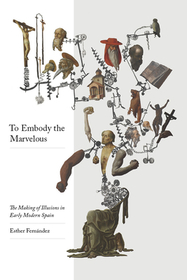
To Embody the Marvelous – The Making of Illusions in Early Modern Spain
The Making of Illusions in Early Modern Spain
-
10% KEDVEZMÉNY?
- A kedvezmény csak az 'Értesítés a kedvenc témákról' hírlevelünk címzettjeinek rendeléseire érvényes.
- Kiadói listaár GBP 80.00
-
38 220 Ft (36 400 Ft + 5% áfa)
Az ár azért becsült, mert a rendelés pillanatában nem lehet pontosan tudni, hogy a beérkezéskor milyen lesz a forint árfolyama az adott termék eredeti devizájához képest. Ha a forint romlana, kissé többet, ha javulna, kissé kevesebbet kell majd fizetnie.
- Kedvezmény(ek) 10% (cc. 3 822 Ft off)
- Kedvezményes ár 34 398 Ft (32 760 Ft + 5% áfa)
Iratkozzon fel most és részesüljön kedvezőbb árainkból!
Feliratkozom
38 220 Ft

Beszerezhetőség
Még nem jelent meg, de rendelhető. A megjelenéstől számított néhány héten belül megérkezik.
Why don't you give exact delivery time?
A beszerzés időigényét az eddigi tapasztalatokra alapozva adjuk meg. Azért becsült, mert a terméket külföldről hozzuk be, így a kiadó kiszolgálásának pillanatnyi gyorsaságától is függ. A megadottnál gyorsabb és lassabb szállítás is elképzelhető, de mindent megteszünk, hogy Ön a lehető leghamarabb jusson hozzá a termékhez.
A termék adatai:
- Kiadó University of Chicago Press
- Megjelenés dátuma 2026. április 23.
- Kötetek száma Hardback
- ISBN 9780826501806
- Kötéstípus Keménykötés
- Terjedelem284 oldal
- Méret 228x152 mm
- Súly 538 g
- Nyelv angol 700
Kategóriák
Hosszú leírás:
In its exploration of puppetry and animation as the performative media of choice for mastering the art of illusion, To Embody the Marvelous engages with early modern notions of wonder in religious, artistic, and social contexts.
From jointed, wood-carved figures of Christ, saintly marionettes that performed hagiographical dramas, experimental puppets and automata in Cervantes&&&39; Don Quixote, and the mechanical sets around which playwright Calder&&&211;n de la Barca devised secular magic shows to deconstruct superstitions, these historical and fictional artifacts reenvisioned religious, artistic, and social notions that led early modern society to critically wrestle with enchantment and disenchantment.
The use of animated performance objects in Spanish theatrical contexts during the sixteenth and seventeenth centuries became one of the most effective pedagogical means to engage with civil society. Regardless of social strata, readers and spectators alike were caught up in a paradigm shift wherein belief systems were increasingly governed by reason-even though the discursive primacy of supernatural doxa and Christian wonder remained firmly entrenched. Thanks to their potential for motion, religious and profane puppets, automata, and mechanical stage props deployed a rationalized sense of wonder that illustrates the relationship between faith and reason, reevaluates the boundaries of fiction in art and entertainment cultures, acknowledges the rise of science and technology, and questions normative authority.

