

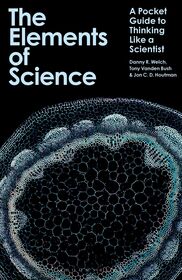
The Elements of Science
A Pocket Guide to Thinking Like a Scientist
-
18% KEDVEZMÉNY?
- Kiadói listaár GBP 45.00
-
20 317 Ft (19 350 Ft + 5% áfa)
Az ár azért becsült, mert a rendelés pillanatában nem lehet pontosan tudni, hogy a beérkezéskor milyen lesz a forint árfolyama az adott termék eredeti devizájához képest. Ha a forint romlana, kissé többet, ha javulna, kissé kevesebbet kell majd fizetnie.
- Kedvezmény(ek) 18% (kb. 3 657 Ft)
- Kedvezményes ár 16 660 Ft (15 867 Ft + 5% áfa)
- A kedvezmény érvényes eddig: 2026. október 31.
16 660 Ft

Beszerezhetőség
Még nem jelent meg, de rendelhető. A megjelenéstől számított néhány héten belül megérkezik.
Why don't you give exact delivery time?
A beszerzés időigényét az eddigi tapasztalatokra alapozva adjuk meg. Azért becsült, mert a terméket külföldről hozzuk be, így a kiadó kiszolgálásának pillanatnyi gyorsaságától is függ. A megadottnál gyorsabb és lassabb szállítás is elképzelhető, de mindent megteszünk, hogy Ön a lehető leghamarabb jusson hozzá a termékhez.
A termék adatai:
- Kiadó Bloomsbury Publishing (UK)
- Megjelenés dátuma 2026. november 12.
- ISBN 9781350570757
- Kötéstípus Keménykötés
- Terjedelem128 oldal
- Méret 198x129 mm
- Nyelv
- Illusztrációk 20 bw illus 700
Kategóriák
Rövid leírás:
This is a step-by-step guide to conducting 'good science' reliably and confidently, for scientists at every level of their training and professional progress.
TöbbHosszú leírás:
For anyone working in the sciences, from aspiring research students to seasoned professionals, this book sets out every step of the scientific method in a pithy, easy-to-read, practical guide. Covering every component of this long-established process, it organizes them into a unique three-part workflow: pre-experiment, at the bench, and post-experiment.
While ostensibly taught from a young age, many steps of the scientific method are ignored or skipped in contemporary research. Elements of Science walks you through each step in turn and underpins them with the pressing ethical concerns in each case. Following these steps and understanding their role in your processes is the surest route to making sure that your research is rigorous and reproducible. The book's first part covers everything that you need to consider when forming a hypothesis and formulating an experiment, from initial observations to preparatory research. The second part deals with the bench work - conducting the experiment, recording the data, analysing the results and drawing your conclusions. Finally, the book rounds out a vital but often overlooked aspect of scientific impact: how to report your results clearly and compellingly. To avoid flawed design, interpret data with confidence, and conduct 'good science' reliably, the scientific method is a crucial tool in every scientist's kit.
Tartalomjegyzék:
Part One: Desk
1. Make an Observation
2. Ask a Question
3. Do Background Research
4. Formulate a Hypothesis
Part Two: Bench
5. Conduct and Experiment
6. Collect and Record Data
7. Analyze Results
8. Draw Conclusions
Part Three: Universe
9. Report the Results

