

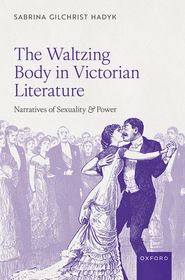
The Waltzing Body in Victorian Literature
Narratives of Sexuality and Power
-
10% KEDVEZMÉNY?
- A kedvezmény csak az 'Értesítés a kedvenc témákról' hírlevelünk címzettjeinek rendeléseire érvényes.
- Kiadói listaár GBP 77.00
-
34 765 Ft (33 110 Ft + 5% áfa)
Az ár azért becsült, mert a rendelés pillanatában nem lehet pontosan tudni, hogy a beérkezéskor milyen lesz a forint árfolyama az adott termék eredeti devizájához képest. Ha a forint romlana, kissé többet, ha javulna, kissé kevesebbet kell majd fizetnie.
- Kedvezmény(ek) 10% (kb. 3 476 Ft)
- Kedvezményes ár 31 289 Ft (29 799 Ft + 5% áfa)
Iratkozzon fel most és részesüljön kedvezőbb árainkból!
Feliratkozom
34 765 Ft

Beszerezhetőség
Becsült beszerzési idő: A Prosperónál jelenleg nincsen raktáron, de a kiadónál igen. Beszerzés kb. 3-5 hét..
A Prosperónál jelenleg nincsen raktáron.
Why don't you give exact delivery time?
A beszerzés időigényét az eddigi tapasztalatokra alapozva adjuk meg. Azért becsült, mert a terméket külföldről hozzuk be, így a kiadó kiszolgálásának pillanatnyi gyorsaságától is függ. A megadottnál gyorsabb és lassabb szállítás is elképzelhető, de mindent megteszünk, hogy Ön a lehető leghamarabb jusson hozzá a termékhez.
A termék adatai:
- Kiadó OUP Oxford
- Megjelenés dátuma 2025. május 8.
- ISBN 9780198932529
- Kötéstípus Keménykötés
- Terjedelem240 oldal
- Méret 240x164x20 mm
- Súly 544 g
- Nyelv angol
- Illusztrációk 26 black and white images/figures 585
Kategóriák
Rövid leírás:
The Waltzing Body in Victorian Literature traces the evolution of the waltz from subversive to traditional across the 19th century, focusing on the Victorian authors who wrote about the waltz, exploring ideas around sexual desire, female empowerment, shifting masculinity, queer erasure, and the fear of being left behind in a modernizing world.
TöbbHosszú leírás:
The Waltzing Body in Victorian Literature: Narratives of Sexuality and Power traces the evolution of the waltz from a taboo dance in the early nineteenth century to a gracefully nostalgic practice that must be preserved by the century's end. While Sabrina Gilchrist Hadyk references eighteenth-century authors to frame the waltz's initial reception in England, the study focuses primarily on Victorian authors who shaped how and why this dance was paradoxically viewed as elegant, effeminate, and sterile. Hadyk explores female sexuality and the concept of choice in the ballroom; a shifting and sometimes contradictory understanding of masculinity through male performance; the erasure of and reclamation of queer desire in heterosexual courting spaces; and the rhetoric of new technologies that attempted to contain, shape, and memorialize a temporal art form. A brief epilogue considers how late-Victorian (and heavily sanitized and romanticized) depictions of the waltz reverberate today in popular films and reality TV, which perpetuate Victorian assumptions about class, gender, sexuality, and more. By understanding the history of the waltz, the reader is invited to examine the dizzying discomfort that many Victorians expressed about forging ahead into a modern (and modernizing) world, particularly at the turn of the century. With comparatively little scholarship around understanding dance scenes and dance semiotics in literature, this book articulates a new interpretive path for familiar and unfamiliar nineteenth-century narratives, offering new ways of understanding and engaging with the role and culture of dance.
This book articulates a new interpretive path for familiar and unfamiliar nineteenth-century narratives, offering new ways of understanding and engaging with the role and culture of dance.
Tartalomjegyzék:
Introduction: The Emergence and (Im)Permanence of the Waltz
Lady's Choice: Sexual Selection in the Waltzing Ballroom
Take the Lead: The Changing Role of Men in the Waltzing Ballroom
Lascivious Revolutions: Queering the Waltzing Ballroom
Keeping Perfect Time: Technology's Impact on the Dancing Body
Epilogue: Circling Back to the Waltz and Reliving (Pseudo-)Victorianism Today

