

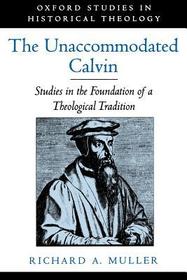
The Unaccommodated Calvin
Studies in the Foundation of a Theological Tradition
Sorozatcím: Oxford Studies in Historical Theology;
-
10% KEDVEZMÉNY?
- A kedvezmény csak az 'Értesítés a kedvenc témákról' hírlevelünk címzettjeinek rendeléseire érvényes.
- Kiadói listaár GBP 49.99
-
23 882 Ft (22 745 Ft + 5% áfa)
Az ár azért becsült, mert a rendelés pillanatában nem lehet pontosan tudni, hogy a beérkezéskor milyen lesz a forint árfolyama az adott termék eredeti devizájához képest. Ha a forint romlana, kissé többet, ha javulna, kissé kevesebbet kell majd fizetnie.
- Kedvezmény(ek) 10% (cc. 2 388 Ft off)
- Kedvezményes ár 21 494 Ft (20 471 Ft + 5% áfa)
Iratkozzon fel most és részesüljön kedvezőbb árainkból!
Feliratkozom
23 882 Ft

Beszerezhetőség
Megrendelésre a kiadó utánnyomja a könyvet. Rendelhető, de a szokásosnál kicsit lassabban érkezik meg.
Why don't you give exact delivery time?
A beszerzés időigényét az eddigi tapasztalatokra alapozva adjuk meg. Azért becsült, mert a terméket külföldről hozzuk be, így a kiadó kiszolgálásának pillanatnyi gyorsaságától is függ. A megadottnál gyorsabb és lassabb szállítás is elképzelhető, de mindent megteszünk, hogy Ön a lehető leghamarabb jusson hozzá a termékhez.
A termék adatai:
- Kiadó OUP USA
- Megjelenés dátuma 2002. március 7.
- ISBN 9780195151688
- Kötéstípus Puhakötés
- Terjedelem324 oldal
- Méret 226x165x19 mm
- Súly 445 g
- Nyelv angol 0
Kategóriák
Rövid leírás:
This book attempts to understand Calvin in his sixteenth-century context, with attention to continuities and discontinuities between his thought and that of his predecessors, contemporaries, and successors. Richard Muller is particularly interested in the interplay between theological and philosophical themes common to Calvin and the medieval doctors, and in developments in rhetoric and method associated with humanism.
TöbbHosszú leírás:
This book attempts to understand Calvin in his sixteenth-century context, with attention to continuities and discontinuities between his thought and that of his predecessors, contemporaries, and successors. Richard Muller is particularly interested in the interplay between theological and philosophical themes common to Calvin and the medieval doctors, and in developments in rhetoric and method associated with humanism. He shows that Calvin's theology evidences the impact of humanist philology and rhetoric, of patristics, and also - both positively and negatively - of the categories of medieval scholastic thought. Calvin's conclusions, together with those of a group of contemporary Reformed and Lutheran thinkers, famously became the basis of much later Protestant theology. But understood in its sixteenth-century context, Muller argues, Calvin's theology proves both intriguing and intractable to twentieth-century concerns. This intractable and unaccomodated Calvin, he says, is important to our historical understanding in direct proportion to the level of distortion found in several generations of modern dogmatic analysis of Calvin's thought.
Muller's scholarship is so strong and his arguments so convincing that future Calvin scholars will only be able to ignore this book at their peril ... essential reading for anyone wishing to study Calvin's theology and exegesis, both as a model of critical historical methodology and for it's illumination of Calvin's program and the development of his thought.

