

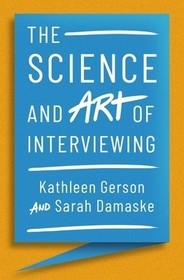
The Science and Art of Interviewing
-
10% KEDVEZMÉNY?
- A kedvezmény csak az 'Értesítés a kedvenc témákról' hírlevelünk címzettjeinek rendeléseire érvényes.
- Kiadói listaár GBP 24.99
-
11 938 Ft (11 370 Ft + 5% áfa)
Az ár azért becsült, mert a rendelés pillanatában nem lehet pontosan tudni, hogy a beérkezéskor milyen lesz a forint árfolyama az adott termék eredeti devizájához képest. Ha a forint romlana, kissé többet, ha javulna, kissé kevesebbet kell majd fizetnie.
- Kedvezmény(ek) 10% (cc. 1 194 Ft off)
- Kedvezményes ár 10 745 Ft (10 233 Ft + 5% áfa)
Iratkozzon fel most és részesüljön kedvezőbb árainkból!
Feliratkozom
11 938 Ft

Beszerezhetőség
Megrendelésre a kiadó utánnyomja a könyvet. Rendelhető, de a szokásosnál kicsit lassabban érkezik meg.
Why don't you give exact delivery time?
A beszerzés időigényét az eddigi tapasztalatokra alapozva adjuk meg. Azért becsült, mert a terméket külföldről hozzuk be, így a kiadó kiszolgálásának pillanatnyi gyorsaságától is függ. A megadottnál gyorsabb és lassabb szállítás is elképzelhető, de mindent megteszünk, hogy Ön a lehető leghamarabb jusson hozzá a termékhez.
A termék adatai:
- Kiadó OUP USA
- Megjelenés dátuma 2020. december 10.
- ISBN 9780199324293
- Kötéstípus Puhakötés
- Terjedelem304 oldal
- Méret 231x155x22 mm
- Súly 454 g
- Nyelv angol 139
Kategóriák
Rövid leírás:
In The Science and Art of Interviewing, Kathleen Gerson and Sarah Damaske offer clear, theoretically informed and empirically rich strategies for conducting interview studies. Presenting both a rationale and guide to the science-and art-of in-depth interviewing to take readers through all the steps in the research process, Gerson and Damaske show readers how to develop a research design for interviewing, decide on and find an appropriate sample, construct a questionnaire, conduct probing interviews, and analyze the data they collect.
TöbbHosszú leírás:
Qualitative interviewing is among the most widely used methods in the social sciences, but it is arguably the least understood. In The Science and Art of Interviewing, Kathleen Gerson and Sarah Damaske offer clear, theoretically informed and empirically rich strategies for conducting interview studies. They present both a rationale and guide to the science-and art-of in-depth interviewing to take readers through all the steps in the research process, from the initial stage of formulating a question to the final one of presenting the results. Gerson and Damaske show readers how to develop a research design for interviewing, decide on and find an appropriate sample, construct a questionnaire, conduct probing interviews, and analyze the data they collect. At each stage, they also provide practical tips about how to address the ever-present, but rarely discussed challenges that qualitative researchers routinely encounter, particularly emphasizing the relationship between conducting well-crafted research and building powerful social theories. With an engaging, accessible style, The Science and Art of Interviewing targets a wide range of audiences, from upper-level undergraduates and graduate methods courses to students embarking on their dissertations to seasoned researchers at all stages of their careers.
All in all, The Science and Art of Interviewing has two substantial achievements. First, it makes a compelling case for interviewing. It convinces us that it is a powerful tool to uncover rarely observed or even taken-for-granted phenomena given that interviews facilitate 'opening the black box' of individual or organisational processes that are otherwise difficult to observe. Metaphorically speaking, they allow us to get into the kitchen where the dish is being cooked and talk to many different actors that take part in the process. Through this, we get to know key actors, interact with them and uncover processes through their experiences. Second, as interviewing is a laborious, demanding task and process, from identifying our research puzzles to reporting our findings, this book guides us through constructing the road to the end of the research tunnel where enlightenment may dazzle us.
Tartalomjegyzék:
Acknowledgments
Chapter 1: Depth Interviewing as Science and Art
Chapter 2: Getting Started: Pinning Down the Questions and Research Design
Chapter 3: Interviews with Whom? When a Big Question Meets a Small Sample
Chapter 4: Constructing an Interview Guide: Creating a Flexible Structure
Chapter 5: Conducting Interviews: Seeking Discoveries That Matter
Chapter 6: Analyzing Interviews: Making Sense of Complex Material
Chapter 7: Pulling It All Together: Telling Your Story and Making Your Case
Appendix A: Examples of Recruitment Documents and Procedures
Appendix B: Examples of Consent Forms
Appendix C: Interview Schedules
Notes
References
Index

