

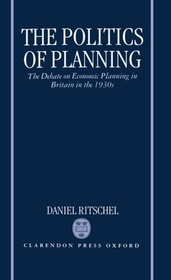
The Politics of Planning
The Debate on Economic Planning in Britain in the 1930s
Sorozatcím: Oxford Historical Monographs;
-
10% KEDVEZMÉNY?
- A kedvezmény csak az 'Értesítés a kedvenc témákról' hírlevelünk címzettjeinek rendeléseire érvényes.
- Kiadói listaár GBP 59.00
-
26 638 Ft (25 370 Ft + 5% áfa)
Az ár azért becsült, mert a rendelés pillanatában nem lehet pontosan tudni, hogy a beérkezéskor milyen lesz a forint árfolyama az adott termék eredeti devizájához képest. Ha a forint romlana, kissé többet, ha javulna, kissé kevesebbet kell majd fizetnie.
- Kedvezmény(ek) 10% (kb. 2 663 Ft)
- Kedvezményes ár 23 975 Ft (22 833 Ft + 5% áfa)
Iratkozzon fel most és részesüljön kedvezőbb árainkból!
Feliratkozom
26 638 Ft

Beszerezhetőség
Megrendelésre a kiadó utánnyomja a könyvet. Rendelhető, de a szokásosnál kicsit lassabban érkezik meg.
Why don't you give exact delivery time?
A beszerzés időigényét az eddigi tapasztalatokra alapozva adjuk meg. Azért becsült, mert a terméket külföldről hozzuk be, így a kiadó kiszolgálásának pillanatnyi gyorsaságától is függ. A megadottnál gyorsabb és lassabb szállítás is elképzelhető, de mindent megteszünk, hogy Ön a lehető leghamarabb jusson hozzá a termékhez.
A termék adatai:
- Kiadó OUP Oxford
- Megjelenés dátuma 1997. július 10.
- ISBN 9780198206477
- Kötéstípus Keménykötés
- Terjedelem384 oldal
- Méret 225x144x26 mm
- Súly 593 g
- Nyelv angol 0
Kategóriák
Rövid leírás:
The concept of `economic planning' was a central theme of the popular economic policy debate in the 1930s. Dr Ritschel traces the many interpretations of planning, and examines the process of idealogical construction and dissemination of the new economic ideas. He finishes with an explanation of the planners' retreat, later in the decade, from the economics of planning towards the far less ambitious (but also less contentious) alternative - the `middle way' of Keynesian economics.
TöbbHosszú leírás:
The idea of `economic planning' was a central theme of the radical economic policy debate in the 1930s. Born of the inter-war economic crisis, the call for the reconstruction of the economy according to a `plan' of one kind or another spanned practically the entire spectrum of the politics of the day. The fashion for planning is often seen as the seedbed of the Keynesian revolution and the `Butskellite' consensus of thenext decade. Yet `planning' was neither uniformly Keynesian nor, in fact, indicative of political agreement over economic policy. Beneath the shared language of planning, the radical economic debate was riven by the same ideological rifts which dominated the more conventional political scene. Dr Ritschel traces the many interpretations of planning, and examines the process of ideological construction and dissemination of the new economic ideas. He finishes with an explanation of the planners' retreat, late in the decade, from the divisive economics of planning towards the less ambitious but also far less contentious alternative - the `middle way' of Keynesian economics.
an appealing and well-made argument

