

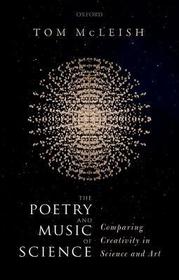
The Poetry and Music of Science
Comparing Creativity in Science and Art
-
10% KEDVEZMÉNY?
- A kedvezmény csak az 'Értesítés a kedvenc témákról' hírlevelünk címzettjeinek rendeléseire érvényes.
- Kiadói listaár GBP 35.49
-
16 023 Ft (15 260 Ft + 5% áfa)
Az ár azért becsült, mert a rendelés pillanatában nem lehet pontosan tudni, hogy a beérkezéskor milyen lesz a forint árfolyama az adott termék eredeti devizájához képest. Ha a forint romlana, kissé többet, ha javulna, kissé kevesebbet kell majd fizetnie.
- Kedvezmény(ek) 10% (cc. 1 602 Ft off)
- Kedvezményes ár 14 421 Ft (13 734 Ft + 5% áfa)
Iratkozzon fel most és részesüljön kedvezőbb árainkból!
Feliratkozom
16 023 Ft

Beszerezhetőség
Becsült beszerzési idő: A Prosperónál jelenleg nincsen raktáron, de a kiadónál igen. Beszerzés kb. 3-5 hét..
A Prosperónál jelenleg nincsen raktáron.
Why don't you give exact delivery time?
A beszerzés időigényét az eddigi tapasztalatokra alapozva adjuk meg. Azért becsült, mert a terméket külföldről hozzuk be, így a kiadó kiszolgálásának pillanatnyi gyorsaságától is függ. A megadottnál gyorsabb és lassabb szállítás is elképzelhető, de mindent megteszünk, hogy Ön a lehető leghamarabb jusson hozzá a termékhez.
A termék adatai:
- Kiadó OUP Oxford
- Megjelenés dátuma 2019. március 7.
- ISBN 9780198797999
- Kötéstípus Keménykötés
- Terjedelem384 oldal
- Méret 219x149x25 mm
- Súly 650 g
- Nyelv angol
- Illusztrációk 14 colour & 6 B/W illustrations 0
Kategóriák
Rövid leírás:
The Poetry and Music of Science examines aspects of science and art that bear close comparison - for example the art of the novel and the art of scientific experimentation. The book eavesdrops on conversations between scientists on how new theories arise, and listens to artists' and composers' witness of their own creative processes.
TöbbHosszú leírás:
What human qualities are needed to make scientific discoveries, and which to make great art? Many would point to 'imagination' and 'creativity' in the second case but not the first. This book challenges the assumption that doing science is in any sense less creative than art, music or fictional writing and poetry, and treads a historical and contemporary path through common territories of the creative process. The methodological process called the 'scientific method' tells us how to test ideas when we have had them, but not how to arrive at hypotheses in the first place. Hearing the stories that scientists and artists tell about their projects reveals commonalities: the desire for a goal, the experience of frustration and failure, the incubation of the problem, moments of sudden insight, and the experience of the beautiful or sublime.
Selected themes weave the practice of science and art together: visual thinking and metaphor, the transcendence of music and mathematics, the contemporary rise of the English novel and experimental science, and the role of aesthetics and desire in the creative process. Artists and scientists make salient comparisons: Defoe and Boyle; Emmerson and Humboldt, Monet and Einstein, Schumann and Hadamard. The book draws on medieval philosophy at many points as the product of the last age that spent time in inner contemplation of the mystery of how something is mentally brought out from nothing. Taking the phenomenon of the rainbow as an example, the principles of creativity within constraint point to the scientific imagination as a parallel of poetry.
... convergence of many things often throws up a new picture, a process McLeish calls ''seeing the unseen.'' Leaps of imaginations are crucial for this kind of creativity, for it is only by such leaps that one can join disparate domains and bring about the emergence of a new ontological picture. Scientific creativity, when properly understood, has the same structure as creativity in the arts.
Tartalomjegyzék:
Introduction: Creativity and Constraint
Creative Inspiration in Science
Seeing the Unseen: Visual Imagination, and the Unconscious
Experimental Science and the Art of the Novel
Music and Mathematics: Creating the Sublime
Emotion and Reason in Scientific Creation
The End of Creation

