

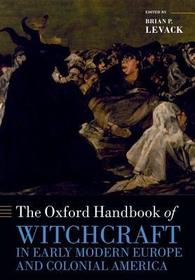
The Oxford Handbook of Witchcraft in Early Modern Europe and Colonial America
Sorozatcím: Oxford Handbooks;
-
10% KEDVEZMÉNY?
- A kedvezmény csak az 'Értesítés a kedvenc témákról' hírlevelünk címzettjeinek rendeléseire érvényes.
- Kiadói listaár GBP 36.99
-
16 700 Ft (15 905 Ft + 5% áfa)
Az ár azért becsült, mert a rendelés pillanatában nem lehet pontosan tudni, hogy a beérkezéskor milyen lesz a forint árfolyama az adott termék eredeti devizájához képest. Ha a forint romlana, kissé többet, ha javulna, kissé kevesebbet kell majd fizetnie.
- Kedvezmény(ek) 10% (kb. 1 670 Ft)
- Kedvezményes ár 15 030 Ft (14 315 Ft + 5% áfa)
Iratkozzon fel most és részesüljön kedvezőbb árainkból!
Feliratkozom
16 700 Ft

Beszerezhetőség
Megrendelésre a kiadó utánnyomja a könyvet. Rendelhető, de a szokásosnál kicsit lassabban érkezik meg.
Why don't you give exact delivery time?
A beszerzés időigényét az eddigi tapasztalatokra alapozva adjuk meg. Azért becsült, mert a terméket külföldről hozzuk be, így a kiadó kiszolgálásának pillanatnyi gyorsaságától is függ. A megadottnál gyorsabb és lassabb szállítás is elképzelhető, de mindent megteszünk, hogy Ön a lehető leghamarabb jusson hozzá a termékhez.
A termék adatai:
- Kiadó OUP Oxford
- Megjelenés dátuma 2014. november 27.
- ISBN 9780198723639
- Kötéstípus Puhakötés
- Terjedelem644 oldal
- Méret 247x173x34 mm
- Súly 1118 g
- Nyelv angol 0
Kategóriák
Rövid leírás:
A collection of essays from leading scholars in the field that collectively study the rise and fall of witchcraft prosecutions in the various kingdoms and territories of Europe and in English, Spanish, and Portuguese colonies in the Americas.
TöbbHosszú leírás:
The essays in this Handbook, written by leading scholars working in the rapidly developing field of witchcraft studies, explore the historical literature regarding witch beliefs and witch trials in Europe and colonial America between the early fifteenth and early eighteenth centuries. During these years witches were thought to be evil people who used magical power to inflict physical harm or misfortune on their neighbours. Witches were also believed to have made pacts with the devil and sometimes to have worshipped him at nocturnal assemblies known as sabbaths. These beliefs provided the basis for defining witchcraft as a secular and ecclesiastical crime and prosecuting tens of thousands of women and men for this offence. The trials resulted in as many as fifty thousand executions.
These essays study the rise and fall of witchcraft prosecutions in the various kingdoms and territories of Europe and in English, Spanish, and Portuguese colonies in the Americas. They also relate these prosecutions to the Catholic and Protestant reformations, the introduction of new forms of criminal procedure, medical and scientific thought, the process of state-building, profound social and economic change, early modern patterns of gender relations, and the wave of demonic possessions that occurred in Europe at the same time. The essays survey the current state of knowledge in the field, explore the academic controversies that have arisen regarding witch beliefs and witch trials, propose new ways of studying the subject, and identify areas for future research.
a worthwhile contribution to the literature which all concerned with early modern witchcraft will consult with profit.
Tartalomjegyzék:
Introduction
Part I: Witch Beliefs
Magic and its Hazards in the Late Medieval West
Fifteenth-Century Witch Beliefs
Popular Witch Beliefs and Magical Practices
Demonologies
Sabbath Stories: Towards a New History of Witches' Assemblies
The Sceptical Tradition
Witchcraft in Early Modern Literature
Images of Witchcraft in Early Modern Europe
Part II: Witchcraft Prosecutions
The First Wave of Trials for Diabolical Witchcraft
The German Witch Trials
Witchcraft and the Local Communities: The Rhine-Moselle Region
Witchcraft Trials in France
Witchcraft and Wealth: The Case of the Netherlands
Witchcraft Prosecutions in Italy
Witchcraft in Iberia
Witchcraft Trials in England
Witchcraft in Scotland
Witchcraft in Poland: Milk and Malefice
Witch-Hunting in Early Modern Hungary
Witchcraft Trials in Russia: History and Historiography
Witchcraft Criminality and Witchcraft Research in the Nordic Countries
Witchcraft in British America
Merging Magical Traditions: Sorcery and Witchcraft in Spanish and Portuguese America
The Decline and End of Witchcraft Prosecutions
Part III: Themes of Witchcraft Research
Witchcraft and Gender in Early Modern Europe
Witchcraft and the Law
Sixteenth-Century Religious Reform and the Witch-Hunts
On the Neuropsychological Origins of Witchcraft Cognition: the Geographic and Economic Variable
Politics, Sate Building, and Witch-Hunting
Science and Witchcraft
Medicine and Witchcraft
Demonic Possession, Exorcism, and Witchcraft

