

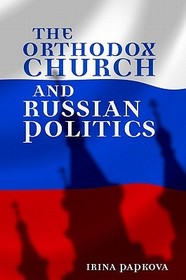
The Orthodox Church and Russian Politics
Sorozatcím: A Woodrow Wilson Center Book;
-
10% KEDVEZMÉNY?
- A kedvezmény csak az 'Értesítés a kedvenc témákról' hírlevelünk címzettjeinek rendeléseire érvényes.
- Kiadói listaár GBP 59.00
-
26 638 Ft (25 370 Ft + 5% áfa)
Az ár azért becsült, mert a rendelés pillanatában nem lehet pontosan tudni, hogy a beérkezéskor milyen lesz a forint árfolyama az adott termék eredeti devizájához képest. Ha a forint romlana, kissé többet, ha javulna, kissé kevesebbet kell majd fizetnie.
- Kedvezmény(ek) 10% (cc. 2 664 Ft off)
- Kedvezményes ár 23 975 Ft (22 833 Ft + 5% áfa)
Iratkozzon fel most és részesüljön kedvezőbb árainkból!
Feliratkozom
26 638 Ft

Beszerezhetőség
Csak rendelésre kapható a kiadónál, kissé időigényes.
Why don't you give exact delivery time?
A beszerzés időigényét az eddigi tapasztalatokra alapozva adjuk meg. Azért becsült, mert a terméket külföldről hozzuk be, így a kiadó kiszolgálásának pillanatnyi gyorsaságától is függ. A megadottnál gyorsabb és lassabb szállítás is elképzelhető, de mindent megteszünk, hogy Ön a lehető leghamarabb jusson hozzá a termékhez.
A termék adatai:
- Kiadó OUP USA
- Megjelenés dátuma 2011. június 9.
- ISBN 9780199791149
- Kötéstípus Keménykötés
- Terjedelem265 oldal
- Méret 155x231x25 mm
- Súly 612 g
- Nyelv angol 0
Kategóriák
Rövid leírás:
This in-depth case study examines the Russian Orthodox Church's influence on federal-level policy in the Russian Federation since the fall of communism. By far more comprehensive than competing works, The Orthodox Church and Russian Politics is based on interviews, close readings of documents--including official state and ecclesiastical publications--and survey work conducted by the author.
TöbbHosszú leírás:
This in-depth case study examines the Russian Orthodox Church's influence on federal-level policy in the Russian Federation since the fall of communism. By far more comprehensive than competing works, The Orthodox Church and Russian Politics is based on interviews, close readings of documents--including official state and ecclesiastical publications--and survey work conducted by the author. The analysis balances the Church as an institutional political actor with the government's response to Church demands. Papkova ultimately concludes that the reciprocal relationship between the Church and state is far weaker and less politically important than Western analysts usually believe.
Papkova traces the Church's relative failure in mobilizing parishioners, influencing political parties, and lobbying the state, citing the 1997 law limiting religious freedoms as its only significant political win. She attributes much of this weakness to the informal division of the Church into liberal, traditionalist, and fundamentalist factions, which prevents it from presenting a unified front. Providing a fresh insight into the role of the Church in Post-Soviet Russia, the book speaks across disciplines to political science, sociology, anthropology, history, and religious studies.
The book provides a valuable assessment of how Russian presidents Yeltsin, Putin, and Medvedev view the role of the Orthodox Church. Also, Papkova skillfully covers the relationship between the Orthodox Church and such important factors in Russian politics as the Communist and the Liberal Democratic parties. This book definitely helps to understand modern Russia.
Tartalomjegyzék:
Acknowledgments
Abbreviations
Chapter One: The Russian Orthodox Church in Contemporary Russian Politics: An Introduction
Chapter Two: The Post-Soviet Russian Orthodox Church and Secular Politics: Ideological Frames
Chapter Three: The Moscow Patriarchate as Political Lobbyist
Chapter Four: Informal Orthodoxy and Radical Politics
Chapter Five: Orthodoxy and Political Identity
Chapter Six: Conclusion: Post-Soviet Canonizations, the Russian Orthodox Church, State, and Society
Appendix
Notes
Index

