

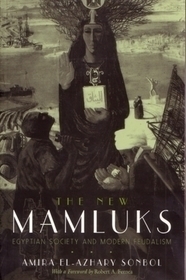
The New Mamluks
Egyptian Society and Modern Feudalism
Sorozatcím: Middle East Studies Beyond Dominant Paradigms;
-
10% KEDVEZMÉNY?
- A kedvezmény csak az 'Értesítés a kedvenc témákról' hírlevelünk címzettjeinek rendeléseire érvényes.
- Kiadói listaár GBP 14.99
-
6 767 Ft (6 445 Ft + 5% áfa)
Az ár azért becsült, mert a rendelés pillanatában nem lehet pontosan tudni, hogy a beérkezéskor milyen lesz a forint árfolyama az adott termék eredeti devizájához képest. Ha a forint romlana, kissé többet, ha javulna, kissé kevesebbet kell majd fizetnie.
- Kedvezmény(ek) % (cc. 0 Ft off)
- Kedvezményes ár 0 Ft (0 Ft + 5% áfa)
Iratkozzon fel most és részesüljön kedvezőbb árainkból!
Feliratkozom
6 767 Ft

Beszerezhetőség
A kiadónál véglegesen elfogyott, nem rendelhető. Érdemes újra keresni a címmel, hátha van újabb kiadás.
Why don't you give exact delivery time?
A beszerzés időigényét az eddigi tapasztalatokra alapozva adjuk meg. Azért becsült, mert a terméket külföldről hozzuk be, így a kiadó kiszolgálásának pillanatnyi gyorsaságától is függ. A megadottnál gyorsabb és lassabb szállítás is elképzelhető, de mindent megteszünk, hogy Ön a lehető leghamarabb jusson hozzá a termékhez.
A termék adatai:
- Kiadás sorszáma New
- Kiadó Syracuse University Press
- Megjelenés dátuma 2000. december 1.
- Kötetek száma Paperback
- ISBN 9780815628453
- Kötéstípus Puhakötés
- Terjedelem272 oldal
- Méret 229x153x18 mm
- Súly 480 g
- Nyelv angol 0
Kategóriák
Rövid leírás:
"This study of modern Egypt aims to open the debate regarding new terms and methods for understanding the Middle East and Islamic societies. Sonbol shows continuity in the division of Egyptian society into two groups: the """"Khassa"""" which tried to impose a hegemonic culture, and the opposing """"Amma""""."
TöbbHosszú leírás:
This study of modern Egypt opens the debate regarding new terms and methods for understanding the Middle East and Islamic societies. Amira el-Azhary Sonbol has produced an analytical history of Egypt from the time before Muhammad Ali to the present day. Using local idioms and terms such as khassa and 'amma, iltazim and fa'iz, she has developed a methodology that is more meaningful because it ties events of the eighteenth century to those of the twentieth.
The author explores the division that has existed in modern Egyptian society between two groups: the khassa, a ruling elite that tried to impose a hegemonic culture that reflected and encouraged its own economic interests, and the 'amma, the masses who clung to their heritage and customs in an attempt to acquire a share of the wealth.
Sonbol discusses today's Islamic movement in Egypt as a revolution correcting the duality of culture that was brought about by historical events like colonialism and the importation of exogenous ideologies. She suggests a different way of looking at culture and the necessity of seeing cultural struggle as a method for studying the historical process that goes beyond the political and economical.

