

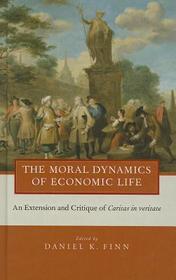
The Moral Dynamics of Economic Life
An Extension and Critique of Caritas in Veritate
-
10% KEDVEZMÉNY?
- A kedvezmény csak az 'Értesítés a kedvenc témákról' hírlevelünk címzettjeinek rendeléseire érvényes.
- Kiadói listaár GBP 112.50
-
50 793 Ft (48 375 Ft + 5% áfa)
Az ár azért becsült, mert a rendelés pillanatában nem lehet pontosan tudni, hogy a beérkezéskor milyen lesz a forint árfolyama az adott termék eredeti devizájához képest. Ha a forint romlana, kissé többet, ha javulna, kissé kevesebbet kell majd fizetnie.
- Kedvezmény(ek) 10% (cc. 5 079 Ft off)
- Kedvezményes ár 45 714 Ft (43 538 Ft + 5% áfa)
Iratkozzon fel most és részesüljön kedvezőbb árainkból!
Feliratkozom
50 793 Ft

Beszerezhetőség
Megrendelésre a kiadó utánnyomja a könyvet. Rendelhető, de a szokásosnál kicsit lassabban érkezik meg.
Why don't you give exact delivery time?
A beszerzés időigényét az eddigi tapasztalatokra alapozva adjuk meg. Azért becsült, mert a terméket külföldről hozzuk be, így a kiadó kiszolgálásának pillanatnyi gyorsaságától is függ. A megadottnál gyorsabb és lassabb szállítás is elképzelhető, de mindent megteszünk, hogy Ön a lehető leghamarabb jusson hozzá a termékhez.
A termék adatai:
- Kiadó OUP USA
- Megjelenés dátuma 2012. május 31.
- ISBN 9780199858330
- Kötéstípus Keménykötés
- Terjedelem192 oldal
- Méret 145x218x17 mm
- Súly 357 g
- Nyelv angol 0
Kategóriák
Rövid leírás:
Caritas in veritate (Charity in Truth) is the ''social'' encyclical of Pope Benedict XVI, one of many papal encyclicals over the last 120 years that address economic life. This volume, based on discussions at a symposium co-sponsored by the Institute for Advanced Catholic Studies and the Pontifical Council for Justice and Peace, analyzes the situation of the Church and the theological basis for Benedict's thinking about the person, community, and the globalized economy.
TöbbHosszú leírás:
Caritas in veritate (Charity in Truth) is the ''social'' encyclical of Pope Benedict XVI, one of many papal encyclicals over the last 120 years that address economic life. This volume, based on discussions at a symposium co-sponsored by the Institute for Advanced Catholic Studies and the Pontifical Council for Justice and Peace, analyzes the situation of the Church and the theological basis for Benedict's thinking about the person, community, and the globalized economy.
The Moral Dynamics of Economic Life engages Benedict's analysis of ''relation,'' the characteristics of contemporary social and economic relationships and the implications of a relational, Trinitarian God for daily human life. Crucial here is the Pope's notion of ''reciprocity,'' an economic relationship characterized by help freely given, but which forms an expectation that the recipient will ''reciprocate,'' either to the donor or, often, to someone else. This ''logic of gift,'' Benedict argues, should influence daily economic life, especially within what he calls ''hybrid'' firms, which make a profit and invest a share of that profit in service to needs outside the firm. Similarly, development - whether of an individual or of a nation - must be integral, neither simply economic nor personal nor psychological nor spiritual, but a comprehensive development that engages all dimensions of a flourishing human life.
The essays, written by social scientists, theologians, policy analysts and others, engage, extend, and critique Benedict's views on these issues, as well as his call for deeper dialogue and a morally based transformation of social and economic structures.
An outstanding collection of stellar scholars here takes the study of Catholic social teaching far past the standard parameters. They join social analysis and natural law with theology and spirituality, yet expose dangers in giving love priority over justice. They confront new complexities of global governance and economics, both challenging and expanding the received ideal (still operative in Benedict XVI) of sovereign states cooperating for the common good under the unified authority of the U.N. The analyses are interdisciplinary, international, and representative of the Catholic right, left, and middle. The productive friction that results yields a glimmer of hope that the faith-based efforts of Christian intellectuals, leaders, and activists can help shape a world order that is more participatory, reciprocal, and just.
Tartalomjegyzék:
Foreword
Contributors
Introduction
Chapter 1: The Situation
Caritas in veritate in Broader Context J. Bryan Hehir
Who are the Americans? Amelia J. Uelmen
Americans and Government Today Rebecca M. Blank
Our Current Economic Situation Matthew J. Slaughter
Global Economic Forces Albino Barrera
Chapter 2: The Theological Grounding of Caritas in veritate
Situating Pope Benedict's Theology Bishop William F. Murphy
Developments in Pope Benedict's Thinking John A. Coleman
A Theology of Gratuitousness Paulinus I. Odozor
Benedict's View of the Person Kenneth R. Himes
Challenges to Benedict's Vision: Sin Michael Novak
Theological Foundations of the Market Albino Barrera
The Promise and Risk of Charity David Hollenbach
Listening to the Experience of the Poor Johan Verstraeten
Chapter 3: Markets and Government
The Vitality of Markets Michael Novak
The Benefits of the Market Albino Barrera
Government and Juridical Framework J. Bryan Hehir
Market Failure & the Role of Government Rebecca M. Blank
Institutions and Individual Morality Rebecca M. Blank
Globalization and Global Governance J. Bryan Hehir
From Government to Governance John A. Coleman
Chapter 4: Re-conceiving''Relation''
Theological Foundations of Human Relation Miguel H. Diaz
Resources for Receptivity to a ''Transcendent Vocation'' Amelia J. Uelmen
Culture as the Locus for Economic Relation Mary L. Hirschfeld
Chapter 5: Reciprocity in Economic Life
Reciprocity and Fraternity Stefano Zamagni
Reciprocity, Trust, and Social Capital Daniel K. Finn
The Logic of Gift and the World of Business Michael J. Naughton
Chapter 6: Business
Leadership Ethics and Caritas in veritate Luk Bouckaert
The Business Enterprise Michael J. Naughton
Chapter 7: Development
How Much of True Development can be Measured? Mary Jo Bane
Expanding the Economic Paradigm of Development Mary L. Hirschfeld
International Aid: Charity is Insufficient Katherine Marshall
Development and Institutional Failures Stefano Zamagni
Chapter 8: Polarization
The Problem of Public Polarization John L. Allen
Resources for Reducing Polarization in Government Mary Jo Bane
Hope in Polarization Amelia J. Uelmen
Chapter 9: Language and the Orientation to Dialogue
The Need for Accessible Language John A. Coleman
The Ambiguities of Accessible Language Mary L. Hirschfeld
Tensions between Proclamation and Dialogue Luk Bouckaert
Dialogue in Light of the Signs of the Times Johan Verstraeten
Chapter 10: Implications
New Institutions and Social Processes Mary Jo Bane
A Better Legal Definition of What is Reasonable Amelia J. Uelmen
Participation as Key for a Just Economy Johan Verstraeten
Re-Conceiving Welfare Policies Stefano Zamagni
Shifting Attention Within the Church Mary Jo Bane
Developing Resources for Business and Business Schools Michael Naughton
Improving Business Education Matthew J. Slaughter
Chapter 11: Conclusion: Caritas in veritate in the Tradition of Catholic Social Thought Cardinal Peter Turkson
Bibliography

