

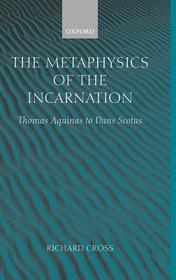
The Metaphysics of the Incarnation
Thomas Aquinas to Duns Scotus
-
10% KEDVEZMÉNY?
- A kedvezmény csak az 'Értesítés a kedvenc témákról' hírlevelünk címzettjeinek rendeléseire érvényes.
- Kiadói listaár GBP 252.50
-
114 003 Ft (108 575 Ft + 5% áfa)
Az ár azért becsült, mert a rendelés pillanatában nem lehet pontosan tudni, hogy a beérkezéskor milyen lesz a forint árfolyama az adott termék eredeti devizájához képest. Ha a forint romlana, kissé többet, ha javulna, kissé kevesebbet kell majd fizetnie.
- Kedvezmény(ek) 10% (kb. 11 400 Ft)
- Kedvezményes ár 102 603 Ft (97 718 Ft + 5% áfa)
Iratkozzon fel most és részesüljön kedvezőbb árainkból!
Feliratkozom
114 003 Ft

Beszerezhetőség
A kiadónál véglegesen elfogyott, nem rendelhető. Érdemes újra keresni a címmel, hátha van újabb kiadás.
Why don't you give exact delivery time?
A beszerzés időigényét az eddigi tapasztalatokra alapozva adjuk meg. Azért becsült, mert a terméket külföldről hozzuk be, így a kiadó kiszolgálásának pillanatnyi gyorsaságától is függ. A megadottnál gyorsabb és lassabb szállítás is elképzelhető, de mindent megteszünk, hogy Ön a lehető leghamarabb jusson hozzá a termékhez.
A termék adatai:
- Kiadó OUP Oxford
- Megjelenés dátuma 2002. február 14.
- ISBN 9780199244362
- Kötéstípus Keménykötés
- Terjedelem380 oldal
- Méret 242x163x27 mm
- Súly 685 g
- Nyelv angol 0
Kategóriák
Rövid leírás:
The period from Thomas Aquinas (1225-1274) to Duns Scotus (c.1266-1308) is one of the richest in the history of Christian theology. The Metaphysics of the Incarnation provides a through examination of the doctrine in this era, making explicit its philosophical and theological foundations, and drawing conclusions for modern Christology.
TöbbHosszú leírás:
The period from Thomas Aquinas to Duns Scotus is one of the richest in the history of Christian theology. The Metaphysics of the Incarnation aims to provide a thorough examination of the doctrine in this era, making explicit its philosophical and theological foundations. Medieval theologians believed that there were good reasons for supposing that Christ's human nature was an individual. In the light of this, Part 1 discusses how the various thinkers held that an individual nature could be united to a divine person. Part 2 shows how one divine person could be incarnate without any other. Part 3 deals with questions of Christological predication, and Part 4 shows how an individual nature is to be distinguished from a person. The work begins with a full account of the metaphysics presupposed in the medieval accounts, and concludes with observations relating medieval accounts to modern Christology.
easy to recommend to anyone interested in the topic, especially to those whose philosophical approach might be best described as analytical. Furthermore, regardless of the particular application to the incarnation employed in the volume, a number of the contributions will be of interest to those working on the philosophy of mind in general.
Tartalomjegyzék:
Introduction. The philosophical problem: substance and nature
The historical and philosophical background
The concrete whole-concrete part model: pro et contra
The substance-accident model: (1) Franciscans from Bonaventure to William of Ware
The substance-accident model: (2) Giles of Rome and his opponents
The substance-accident model: (3) Duns Scotus
Consequences of the Union
Some points of Christological consensus
The ratio terminandi: essence or personal property?
Christological predication
Relations and intrinsic properties
Christ's human activity: agency and predication
Counting persons and natures
The historical background
Esse theories of subsistence
Relation theories of subsistence
Negation theories of subsistence: (1) The thirteenth century
Negation theories of subsistence: (2) Duns Scotus
A programme for Christology

