

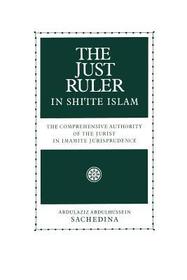
The Just Ruler in Shi'ite Islam
The Comprehensive Authority of the Jurist in Imamite Jurisprudence
-
10% KEDVEZMÉNY?
- A kedvezmény csak az 'Értesítés a kedvenc témákról' hírlevelünk címzettjeinek rendeléseire érvényes.
- Kiadói listaár GBP 72.00
-
34 398 Ft (32 760 Ft + 5% áfa)
Az ár azért becsült, mert a rendelés pillanatában nem lehet pontosan tudni, hogy a beérkezéskor milyen lesz a forint árfolyama az adott termék eredeti devizájához képest. Ha a forint romlana, kissé többet, ha javulna, kissé kevesebbet kell majd fizetnie.
- Kedvezmény(ek) 10% (cc. 3 440 Ft off)
- Kedvezményes ár 30 958 Ft (29 484 Ft + 5% áfa)
Iratkozzon fel most és részesüljön kedvezőbb árainkból!
Feliratkozom
34 398 Ft

Beszerezhetőség
Megrendelésre a kiadó utánnyomja a könyvet. Rendelhető, de a szokásosnál kicsit lassabban érkezik meg.
Why don't you give exact delivery time?
A beszerzés időigényét az eddigi tapasztalatokra alapozva adjuk meg. Azért becsült, mert a terméket külföldről hozzuk be, így a kiadó kiszolgálásának pillanatnyi gyorsaságától is függ. A megadottnál gyorsabb és lassabb szállítás is elképzelhető, de mindent megteszünk, hogy Ön a lehető leghamarabb jusson hozzá a termékhez.
A termék adatai:
- Kiadó OUP USA
- Megjelenés dátuma 1998. november 19.
- ISBN 9780195119152
- Kötéstípus Puhakötés
- Terjedelem296 oldal
- Méret 230x155x19 mm
- Súly 481 g
- Nyelv angol 0
Kategóriák
Rövid leírás:
Following the Islamic revolution of 1978-79 in Iran, the new Islamic regime justified the rule of the Ayatollah Khomeni, and of the Shi'ite imams in general, on the basis of the doctrine that righteous jurist is best suited to establish the ideal public order. Sachedina shows that this concept has no apparent parallel in Sunni Islam. In this study, he seeks the origins of this concept in the Sunni/Shi'ite schism that took place after the death of the Prophet, and then traces its historical evolution up to the present time.
TöbbHosszú leírás:
Following the Islamic revolution of 1978-79 in Iran, the new Islamic regime justified the rule of the Ayatollah Khomeni, and of the Shi'ite imams in general, on the basis of the doctrine that righteous jurist is best suited to establish the ideal public order. Sachedina shows that this concept has no apparent parallel in Sunni Islam. In this study, he seeks the origins of this concept in the Sunni/Shi'ite schism that took place after the death of the Prophet, and then traces its historical evolution up to the present time.
Makes a welcome addition to the growing literature on Shi'ite political thought. The author draws on an impressive body of legal works, both classical and more recent...in order to demonstrate the orthodox view of authority and its implications in the case of the Imam, the temporal ruler, and the jurist.

