

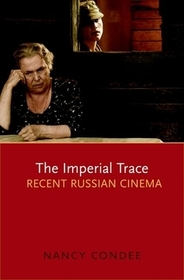
The Imperial Trace
Recent Russian Cinema
-
10% KEDVEZMÉNY?
- A kedvezmény csak az 'Értesítés a kedvenc témákról' hírlevelünk címzettjeinek rendeléseire érvényes.
- Kiadói listaár GBP 76.00
-
34 314 Ft (32 680 Ft + 5% áfa)
Az ár azért becsült, mert a rendelés pillanatában nem lehet pontosan tudni, hogy a beérkezéskor milyen lesz a forint árfolyama az adott termék eredeti devizájához képest. Ha a forint romlana, kissé többet, ha javulna, kissé kevesebbet kell majd fizetnie.
- Kedvezmény(ek) 10% (cc. 3 431 Ft off)
- Kedvezményes ár 30 883 Ft (29 412 Ft + 5% áfa)
Iratkozzon fel most és részesüljön kedvezőbb árainkból!
Feliratkozom
34 314 Ft

Beszerezhetőség
Megrendelésre a kiadó utánnyomja a könyvet. Rendelhető, de a szokásosnál kicsit lassabban érkezik meg.
Why don't you give exact delivery time?
A beszerzés időigényét az eddigi tapasztalatokra alapozva adjuk meg. Azért becsült, mert a terméket külföldről hozzuk be, így a kiadó kiszolgálásának pillanatnyi gyorsaságától is függ. A megadottnál gyorsabb és lassabb szállítás is elképzelhető, de mindent megteszünk, hogy Ön a lehető leghamarabb jusson hozzá a termékhez.
A termék adatai:
- Kiadó OUP USA
- Megjelenés dátuma 2009. október 8.
- ISBN 9780195366761
- Kötéstípus Keménykötés
- Terjedelem360 oldal
- Méret 236x155x22 mm
- Súly 567 g
- Nyelv angol
- Illusztrációk 20 halftones 0
Kategóriák
Hosszú leírás:
The collapse of the USSR seemed to spell the end of the empire, yet it by no means marked the end of Russia's enduring imperial preoccupations, extending over four and a half centuries since the reign of Ivan IV. Is there such a thing as an imperial trace in Russia's contemporary culture? Condee argues that we cannot make sense of contemporary Russian culture without accounting for its imperial legacy and mapping out the terms of such an analysis. She turns to the instance of contemporary cinema to focus this line of inquiry. Within film (and implicitly other cultural fields as well) do we limit our accounting to narrative evidence-Chechen wars at the periphery, historical costume dramas of court life-or could an imperial trace be sought in other, more embedded ways, in the manner and structure or representation, the conditions of productions, the recurrent preoccupations of its leading filmmakers, the ways in which collective belonging is figured or disfigured? This book organizes these questions around the work of Russia's internationally ranked auteurs of the late Soviet and post-Soviet period: Kira Muratova, Vadim Abdrashitov, Nikita Mikhalkov, Aleksei German, and Aleksandr Sokurov.
The Imperial Trace is hands down the most thought-provoking book that I have read in quite some time. It is as well (and wittily) written as it is thoroughly researched and skillfully argued, no mean feat given the complexity of the ideas therein. This superb book is essential reading for anyone interested in nations and empire and their cultural manifestations, in Russian cultural politics, and in late Soviet and contemporary Russian film.
Tartalomjegyzék:
List of Illustrations
Acknowledgements
Introduction: Custodian of the Empire
Cine-Amnesia: How Russia Forgot to Go to the Movies
Mikhalkov: European but Not Western
Muratova: The Zoological Imperium
Abdrashitov-Mindadze: A Comuunity of Somnambulants
Sokurov: Shuffling Off the Imperial Coil
German: Forensics in the Dynastic Capital
Balabanov: The Metropole's Death Drive
Postscript
References
Index

