

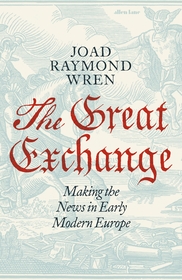
The Great Exchange: Making the News in Early Modern Europe
-
20% KEDVEZMÉNY?
- Kiadói listaár GBP 40.00
-
18 060 Ft (17 200 Ft + 5% áfa)
Az ár azért becsült, mert a rendelés pillanatában nem lehet pontosan tudni, hogy a beérkezéskor milyen lesz a forint árfolyama az adott termék eredeti devizájához képest. Ha a forint romlana, kissé többet, ha javulna, kissé kevesebbet kell majd fizetnie.
- Kedvezmény(ek) 20% (cc. 3 612 Ft off)
- Kedvezményes ár 14 448 Ft (13 760 Ft + 5% áfa)
- A kedvezmény érvényes eddig: 2026. augusztus 31.
14 448 Ft

Beszerezhetőség
Becsült beszerzési idő: A Prosperónál jelenleg nincsen raktáron, de a kiadónál igen. Beszerzés kb. 3-5 hét..
A Prosperónál jelenleg nincsen raktáron.
Why don't you give exact delivery time?
A beszerzés időigényét az eddigi tapasztalatokra alapozva adjuk meg. Azért becsült, mert a terméket külföldről hozzuk be, így a kiadó kiszolgálásának pillanatnyi gyorsaságától is függ. A megadottnál gyorsabb és lassabb szállítás is elképzelhető, de mindent megteszünk, hogy Ön a lehető leghamarabb jusson hozzá a termékhez.
A termék adatai:
- Kiadó Penguin Books Ltd
- Megjelenés dátuma 2025. július 10.
- ISBN 9780241188538
- Kötéstípus Keménykötés
- Terjedelem624 oldal
- Méret 241x164x39 mm
- Súly 1057 g
- Nyelv angol 729
Kategóriák
Hosszú leírás:
‘Highly ambitious and impressive ... a rich, multifaceted and thought-provoking book'
Noel Malcolm, Times Literary Supplement
News moves. It is a battle, a scandal, a disaster. It is a letter, a newspaper, a proclamation. News is a material thing, but also something between us, something we take into us and feel.
This book tells the story of news from the sunset of the Middle Ages to the rise of mass media in modern times. It begins in Renaissance Italy, with the envoys and merchants who drew in and disseminated news across Europe, establishing its channels and conventions. Following the beat of news around the continent, it uncovers a vast, invisible network traversing the boundaries of geography and politics, religion and language.
Joad Raymond Wren allows the reader to see news – of the battle of Lepanto, the siege of Vienna – spreading around this network in real time. Dispelling the tenacious myth that news was until the printing press scarce and unreliable, and until the telegraph slow and provincial, he opens up windows onto a world buzzing with news from faraway. News brought the distant closer, and provided the means for Europe to know itself. The continent was, for a time, held together by that most essential of human acts: communication.

