

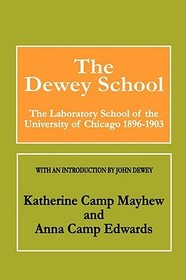
The Dewey School
The Laboratory School of the University of Chicago 1896-1903
-
10% KEDVEZMÉNY?
- Kiadói listaár GBP 49.99
-
22 570 Ft (21 495 Ft + 5% áfa)
Az ár azért becsült, mert a rendelés pillanatában nem lehet pontosan tudni, hogy a beérkezéskor milyen lesz a forint árfolyama az adott termék eredeti devizájához képest. Ha a forint romlana, kissé többet, ha javulna, kissé kevesebbet kell majd fizetnie.
- Kedvezmény(ek) 10% (kb. 2 257 Ft)
- Kedvezményes ár 20 313 Ft (19 346 Ft + 5% áfa)
20 313 Ft

Beszerezhetőség
Becsült beszerzési idő: A Prosperónál jelenleg nincsen raktáron, de a kiadónál igen. Beszerzés kb. 3-5 hét..
A Prosperónál jelenleg nincsen raktáron.
Why don't you give exact delivery time?
A beszerzés időigényét az eddigi tapasztalatokra alapozva adjuk meg. Azért becsült, mert a terméket külföldről hozzuk be, így a kiadó kiszolgálásának pillanatnyi gyorsaságától is függ. A megadottnál gyorsabb és lassabb szállítás is elképzelhető, de mindent megteszünk, hogy Ön a lehető leghamarabb jusson hozzá a termékhez.
A termék adatai:
- Kiadás sorszáma 1
- Kiadó Routledge
- Megjelenés dátuma 2007. január 15.
- Kötetek száma Paperback
- ISBN 9780202308746
- Kötéstípus Puhakötés
- Terjedelem508 oldal
- Méret 229x152 mm
- Súly 453 g
- Nyelv angol 0
Kategóriák
Rövid leírás:
This book talks of perhaps one of the greatest education experiments in the history of America
TöbbHosszú leírás:
This book talks of perhaps one of the greatest education experiments in the history of America. In 1894 John Dewey moved his position as Chairman of the Philosophy Department at the University of Michigan to assume the position as Chairman of the Department of Philosophy, Psychology, and Pedagogy at the University of Chicago. He would remain there until 1904, his departure prompted in great part by his dissatisfaction regarding his wife's treatment by the administration in her role of principal of the Laboratory School. At this time Dewey was anxious to translate his more abstract ideas into practical form and he saw the position at Chicago affording him a rare opportunity to do this.
The school itself was conceived by Dewey as having an organic functional relation to the theoretical curriculum. Just as Dewey was anxious to merge philosophy and psychology and to relate both of these disciplines to the theoretical study of education, similarly he saw the school as a laboratory for these studies analogous to the laboratory used in science courses. This effort to merge theory and practice is perhaps the major characteristic of Dewey's entire professional career. In the opening sentence of Dewey's remarks in his essay in this volume, "The Theory of the Chicago Experiment," we see the extent to which this problem preoccupied him: "The gap between educational theory and its execution in practice is always so wide that there naturally arises a doubt as to the value of any separate presentation of purely theoretical principles."
This book is an accurate and detailed account of one of the most interesting experiments ever undertaken in America. It provides the reader with the complexity of John Dewey's abstract philosophy experimentalism.
TöbbTartalomjegyzék:
I: Historical Development and Organization; I: General History; II: Experimental Basis of Curriculum; II: The Curriculum-Social Occupations; III: Experimental Practices Developing the Curriculum; IV: Household Occupations; V: Social Occupations Serving The Household; VI: Progress Through Invention and Discovery; VII: Progress Through Exploration and Discovery; VIII: Local History; IX: Colonial History and The Revolution; X: European Background of The Colonists; XI: Experiments in Specialized Activities; XII: Experiments in Specialized Activities; XIII: Experiments in Specialized Activities; XIV: Principles of Growth Guiding Selection of Activities; III: Educational Use of Scientific Method; XV: Experimental Activities Developing Scientific Method and Concepts; XVI: Experimental Activities Developing Origins and Backgrounds of Social Life; XVII: Experimental Activities Developing Skills in Communication and Expression; IV: Personnel—Organization—Evaluation; XVIII: Teachers and School Organization; XIX: Parents and Children; XX: Evaluation of Principles and Practices
Több
