

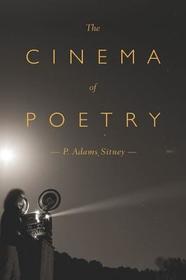
The Cinema of Poetry
-
10% KEDVEZMÉNY?
- A kedvezmény csak az 'Értesítés a kedvenc témákról' hírlevelünk címzettjeinek rendeléseire érvényes.
- Kiadói listaár GBP 155.00
-
69 982 Ft (66 650 Ft + 5% áfa)
Az ár azért becsült, mert a rendelés pillanatában nem lehet pontosan tudni, hogy a beérkezéskor milyen lesz a forint árfolyama az adott termék eredeti devizájához képest. Ha a forint romlana, kissé többet, ha javulna, kissé kevesebbet kell majd fizetnie.
- Kedvezmény(ek) 10% (cc. 6 998 Ft off)
- Kedvezményes ár 62 984 Ft (59 985 Ft + 5% áfa)
Iratkozzon fel most és részesüljön kedvezőbb árainkból!
Feliratkozom
69 982 Ft

Beszerezhetőség
Megrendelésre a kiadó utánnyomja a könyvet. Rendelhető, de a szokásosnál kicsit lassabban érkezik meg.
Why don't you give exact delivery time?
A beszerzés időigényét az eddigi tapasztalatokra alapozva adjuk meg. Azért becsült, mert a terméket külföldről hozzuk be, így a kiadó kiszolgálásának pillanatnyi gyorsaságától is függ. A megadottnál gyorsabb és lassabb szállítás is elképzelhető, de mindent megteszünk, hogy Ön a lehető leghamarabb jusson hozzá a termékhez.
A termék adatai:
- Kiadó OUP USA
- Megjelenés dátuma 2015. január 15.
- ISBN 9780199337026
- Kötéstípus Keménykötés
- Terjedelem292 oldal
- Méret 163x239x22 mm
- Súly 553 g
- Nyelv angol
- Illusztrációk 54 halftones 0
Kategóriák
Rövid leírás:
The Cinema of Poetry emphasizes the vibrant world of European cinema in addition to incorporating the author's long abiding concerns on American avant-garde cinema.
TöbbHosszú leírás:
Since the publication of his foundational work, Visionary Film, P. Adams Sitney has been considered one of our most eloquent and insightful interlocutors on the relationship between American film and poetry. His latest study, The Cinema of Poetry, emphasizes the vibrant world of European cinema in addition to incorporating the author's long abiding concerns on American avant-garde cinema. The work is divided into two principal parts, the first dealing with poetry and a trio of films by Dimitri Kirsanoff, Ingmar Bergman, and Andrei Tarkovsky; the second part explores selected American verse with American avant-garde films by Stan Brakhage, Ken Jacobs, and others. Both parts are linked by Pier Paolo Pasolini's theoretical 1965 essay "Il cinema di poesia" where the writer/director describes the use of the literary device of "free indirect discourse," which accentuates the subjective point-of view as well as the illusion of functioning as if without a camera. In other words, the camera is absent, and the experience of the spectator is to plunge into the dreams and consciousness of the characters and images presented in film. Amplifying and applying the concepts advanced by Pasolini, Sitney offers extended readings of works by T. S. Eliot, Wallace Stevens, and Charles Olson to demonstrate how modernist verse strives for the "camera-less" illusion achieved in a range of films that includes Fanny and Alexander, Stalker, Lawrence Jordan's Magic, and several short works by Joseph Cornell.
P. Adams Sitney offers a monumental, enchanting account of poetry as cinema, turning the analogy upside-down, vividly and deftly tracing nuanced concepts of narrative versus lyric film, psychoanalysis, dreams, and social realities in European filmmakers as well as in cinema of the American avant-garde. Those familiar with Sitney's earlier 'visionary' scholarship will exult in the coming together of multiple strands; those unfamiliar, will be treated to a distilled, layered overview of a significant nexus in the history of film.
Tartalomjegyzék:
Preface
Introduction: An Autobiography of Enthusiasms
I
Pier Paolo Pasolini and "The Cinema of 'Poetry'"
Dimitri Kirsanoff's Ménilmontant
Ingmar Bergman's Primal Scene
Andrey Tarkovsky's Concept of Poetry
II
Poetry and the American Avant-garde Cinema
The Dialectict of Experience in Joseph Cornell's Films
Lawrence Jordan's Magical Instructions
Stan Brakhage's Poetics
Nathaniel Dorsky, Jerome Hiler, and the Polyvalent Film
Gregory J. Markopoulos and the Temenos

