

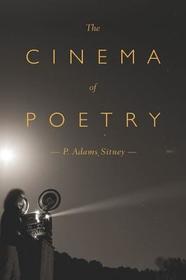
The Cinema of Poetry
- Publisher's listprice GBP 155.00
-
69 982 Ft (66 650 Ft + 5% VAT)
The price is estimated because at the time of ordering we do not know what conversion rates will apply to HUF / product currency when the book arrives. In case HUF is weaker, the price increases slightly, in case HUF is stronger, the price goes lower slightly.
- Discount 10% (cc. 6 998 Ft off)
- Discounted price 62 984 Ft (59 985 Ft + 5% VAT)
Subcribe now and take benefit of a favourable price.
Subscribe
69 982 Ft

Availability
printed on demand
Why don't you give exact delivery time?
Delivery time is estimated on our previous experiences. We give estimations only, because we order from outside Hungary, and the delivery time mainly depends on how quickly the publisher supplies the book. Faster or slower deliveries both happen, but we do our best to supply as quickly as possible.
Product details:
- Publisher OUP USA
- Date of Publication 15 January 2015
- ISBN 9780199337026
- Binding Hardback
- No. of pages292 pages
- Size 163x239x22 mm
- Weight 553 g
- Language English
- Illustrations 54 halftones 0
Categories
Short description:
The Cinema of Poetry emphasizes the vibrant world of European cinema in addition to incorporating the author's long abiding concerns on American avant-garde cinema.
MoreLong description:
Since the publication of his foundational work, Visionary Film, P. Adams Sitney has been considered one of our most eloquent and insightful interlocutors on the relationship between American film and poetry. His latest study, The Cinema of Poetry, emphasizes the vibrant world of European cinema in addition to incorporating the author's long abiding concerns on American avant-garde cinema. The work is divided into two principal parts, the first dealing with poetry and a trio of films by Dimitri Kirsanoff, Ingmar Bergman, and Andrei Tarkovsky; the second part explores selected American verse with American avant-garde films by Stan Brakhage, Ken Jacobs, and others. Both parts are linked by Pier Paolo Pasolini's theoretical 1965 essay "Il cinema di poesia" where the writer/director describes the use of the literary device of "free indirect discourse," which accentuates the subjective point-of view as well as the illusion of functioning as if without a camera. In other words, the camera is absent, and the experience of the spectator is to plunge into the dreams and consciousness of the characters and images presented in film. Amplifying and applying the concepts advanced by Pasolini, Sitney offers extended readings of works by T. S. Eliot, Wallace Stevens, and Charles Olson to demonstrate how modernist verse strives for the "camera-less" illusion achieved in a range of films that includes Fanny and Alexander, Stalker, Lawrence Jordan's Magic, and several short works by Joseph Cornell.
P. Adams Sitney offers a monumental, enchanting account of poetry as cinema, turning the analogy upside-down, vividly and deftly tracing nuanced concepts of narrative versus lyric film, psychoanalysis, dreams, and social realities in European filmmakers as well as in cinema of the American avant-garde. Those familiar with Sitney's earlier 'visionary' scholarship will exult in the coming together of multiple strands; those unfamiliar, will be treated to a distilled, layered overview of a significant nexus in the history of film.
Table of Contents:
Preface
Introduction: An Autobiography of Enthusiasms
I
Pier Paolo Pasolini and "The Cinema of 'Poetry'"
Dimitri Kirsanoff's Ménilmontant
Ingmar Bergman's Primal Scene
Andrey Tarkovsky's Concept of Poetry
II
Poetry and the American Avant-garde Cinema
The Dialectict of Experience in Joseph Cornell's Films
Lawrence Jordan's Magical Instructions
Stan Brakhage's Poetics
Nathaniel Dorsky, Jerome Hiler, and the Polyvalent Film
Gregory J. Markopoulos and the Temenos

