

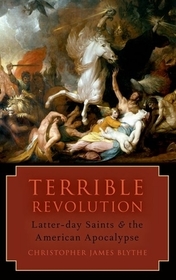
Terrible Revolution
Latter-day Saints and the American Apocalypse
-
10% KEDVEZMÉNY?
- A kedvezmény csak az 'Értesítés a kedvenc témákról' hírlevelünk címzettjeinek rendeléseire érvényes.
- Kiadói listaár GBP 20.99
-
10 027 Ft (9 550 Ft + 5% áfa)
Az ár azért becsült, mert a rendelés pillanatában nem lehet pontosan tudni, hogy a beérkezéskor milyen lesz a forint árfolyama az adott termék eredeti devizájához képest. Ha a forint romlana, kissé többet, ha javulna, kissé kevesebbet kell majd fizetnie.
- Kedvezmény(ek) 10% (cc. 1 003 Ft off)
- Kedvezményes ár 9 025 Ft (8 595 Ft + 5% áfa)
Iratkozzon fel most és részesüljön kedvezőbb árainkból!
Feliratkozom
10 027 Ft

Beszerezhetőség
Becsült beszerzési idő: A Prosperónál jelenleg nincsen raktáron, de a kiadónál igen. Beszerzés kb. 3-5 hét..
A Prosperónál jelenleg nincsen raktáron.
Why don't you give exact delivery time?
A beszerzés időigényét az eddigi tapasztalatokra alapozva adjuk meg. Azért becsült, mert a terméket külföldről hozzuk be, így a kiadó kiszolgálásának pillanatnyi gyorsaságától is függ. A megadottnál gyorsabb és lassabb szállítás is elképzelhető, de mindent megteszünk, hogy Ön a lehető leghamarabb jusson hozzá a termékhez.
A termék adatai:
- Kiadó OUP USA
- Megjelenés dátuma 2023. augusztus 3.
- ISBN 9780197695159
- Kötéstípus Puhakötés
- Terjedelem384 oldal
- Méret 228x146x21 mm
- Súly 454 g
- Nyelv angol 434
Kategóriák
Rövid leírás:
Terrible Revolution is the history of apocalyptic visions in the Mormon experience. Christopher James Blythe follows how "last days" beliefs informed the Church of Jesus Christ of Latter-day Saints' relationship with the United States and how the role of lay visionaries in the tradition changed. Blythe's work draws on hundreds of little-known archival sources to capture, for the first time in scholarship, the 200-year history of Mormon apocalypticism.
TöbbHosszú leírás:
The relationship between early Mormons and the United States was marked by anxiety and hostility, heightened over the course of the nineteenth century by the assassination of Mormon leaders, the Saints' exile from Missouri and Illinois, the military occupation of the Utah territory, and the national crusade against those who practiced plural marriage. Nineteenth-century Latter-day Saints looked forward to apocalyptic events that would unseat corrupt governments across the globe, particularly the tyrannical government of the United States. The infamous "White Horse Prophecy" referred to this coming American apocalypse as "a terrible revolution… in the land of America, such as has never been seen before; for the land will be literally left without a supreme government." Mormons envisioned divine deliverance by way of plagues, natural disasters, foreign invasions, American Indian raids, slave uprisings, or civil war unleashed on American cities and American people. For the Saints, these violent images promised a national rebirth that would vouchsafe the protections of the United States Constitution and end their oppression.
In Terrible Revolution, Christopher James Blythe examines apocalypticism across the history of the Church of Jesus Christ of Latter-day Saints, particularly as it took shape in the writings and visions of the laity. The responses of the church hierarchy to apocalyptic lay prophecies promoted their own form of separatist nationalism during the nineteenth century. Yet, after Utah obtained statehood, as the church sought to assimilate to national religious norms, these same leaders sought to lessen the tensions between themselves and American political and cultural powers. As a result, visions of a violent end to the nation became a liability to disavow and regulate. Ultimately, Blythe argues that the visionary world of early Mormonism, with its apocalyptic emphases, continued in the church's mainstream culture in forms but continued to maintain separatist radical forms at the level of folk-belief.
Certainly, the book reveals a rich lode of apocalypticism that persists and changes within religious traditions that lay claim to be the restoration of all things prior to the earth's final dispensation. In so doing, it invites promising further work by scholars of religious futurism.
Tartalomjegyzék:
Acknowledgments
Introduction
Chapter One: The Apocalyptic Tradition in Early Mormonism
Chapter Two: "Long Shall His Blood...Stain Illinois": Martyrology and Malediction
Chapter Three: The Geography of Mormon Apocalyptic
Chapter Four: The Judgments Begin: Apocalypticism in Utah Territory
Chapter Five: The Americanization of Mormon Apocalyptic
Chapter Six - Twentieth and Twenty-First Century Apocalyptic Trajectories
Afterword: Apocalypticism in the "Mormon Moment"
Notes
Index

