

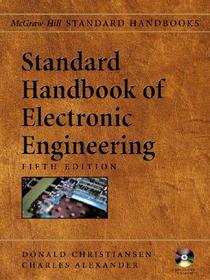
Standard Handbook of Electronic Engineering, 5th Edition
Sorozatcím: Handbook;
-
10% KEDVEZMÉNY?
- A kedvezmény csak az 'Értesítés a kedvenc témákról' hírlevelünk címzettjeinek rendeléseire érvényes.
- Kiadói listaár GBP 89.39
-
40 359 Ft (38 437 Ft + 5% áfa)
Az ár azért becsült, mert a rendelés pillanatában nem lehet pontosan tudni, hogy a beérkezéskor milyen lesz a forint árfolyama az adott termék eredeti devizájához képest. Ha a forint romlana, kissé többet, ha javulna, kissé kevesebbet kell majd fizetnie.
- Kedvezmény(ek) 10% (kb. 4 036 Ft)
- Kedvezményes ár 36 323 Ft (34 593 Ft + 5% áfa)
Iratkozzon fel most és részesüljön kedvezőbb árainkból!
Feliratkozom
40 359 Ft

Beszerezhetőség
Bizonytalan ideig nincs raktáron a kiadónál, rendelése nem javasolt.
Why don't you give exact delivery time?
A beszerzés időigényét az eddigi tapasztalatokra alapozva adjuk meg. Azért becsült, mert a terméket külföldről hozzuk be, így a kiadó kiszolgálásának pillanatnyi gyorsaságától is függ. A megadottnál gyorsabb és lassabb szállítás is elképzelhető, de mindent megteszünk, hogy Ön a lehető leghamarabb jusson hozzá a termékhez.
A termék adatai:
- Kiadás sorszáma 5
- Kiadó McGraw-Hill Education
- Megjelenés dátuma 2005. január 16.
- ISBN 9780071384216
- Kötéstípus Könyv
- Terjedelem oldal
- Méret 236x195x61 mm
- Súly 2046 g
- Nyelv angol 0
Kategóriák
Hosszú leírás:
The Standard Handbook of Electronics Engineering has defined its field for over thirty years. Spun off in the 1960’s from Fink’s Standard Handbook of Electrical Engineering, the Christiansen book has seen its markets grow rapidly, as electronic engineering and microelectronics became the growth engine of digital computing. The EE market has now undergone another seismic shift—away from computing and into communications and media. The Handbook will retain much of its evergreen basic material, but the key applications sections will now focus upon communications, networked media, and medicine—the eventual destination of the majority of graduating EEs these days.
The Standard Handbook of Electronics Engineering has defined its field for over thirty years. Spun off in the 1960’s from Fink’s Standard Handbook of Electrical Engineering, the Christiansen book has seen its markets grow rapidly, as electronic engineering and microelectronics became the growth engine of digital computing. The EE market has now undergone another seismic shift—away from computing and into communications and media. The Handbook will retain much of its evergreen basic material, but the key applications sections will now focus upon communications, networked media, and medicine—the eventual destination of the majority of graduating EEs these days.

