

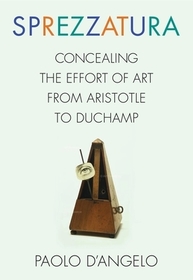
Sprezzatura
Concealing the Effort of Art from Aristotle to Duchamp
-
10% KEDVEZMÉNY?
- A kedvezmény csak az 'Értesítés a kedvenc témákról' hírlevelünk címzettjeinek rendeléseire érvényes.
- Kiadói listaár GBP 28.00
-
12 642 Ft (12 040 Ft + 5% áfa)
Az ár azért becsült, mert a rendelés pillanatában nem lehet pontosan tudni, hogy a beérkezéskor milyen lesz a forint árfolyama az adott termék eredeti devizájához képest. Ha a forint romlana, kissé többet, ha javulna, kissé kevesebbet kell majd fizetnie.
- Kedvezmény(ek) 10% (cc. 1 264 Ft off)
- Kedvezményes ár 11 378 Ft (10 836 Ft + 5% áfa)
Iratkozzon fel most és részesüljön kedvezőbb árainkból!
Feliratkozom
12 642 Ft

Beszerezhetőség
Becsült beszerzési idő: A Prosperónál jelenleg nincsen raktáron, de a kiadónál igen. Beszerzés kb. 3-5 hét..
A Prosperónál jelenleg nincsen raktáron.
Why don't you give exact delivery time?
A beszerzés időigényét az eddigi tapasztalatokra alapozva adjuk meg. Azért becsült, mert a terméket külföldről hozzuk be, így a kiadó kiszolgálásának pillanatnyi gyorsaságától is függ. A megadottnál gyorsabb és lassabb szállítás is elképzelhető, de mindent megteszünk, hogy Ön a lehető leghamarabb jusson hozzá a termékhez.
A termék adatai:
- Kiadó Columbia University Press
- Megjelenés dátuma 2018. április 10.
- ISBN 9780231175821
- Kötéstípus Keménykötés
- Terjedelem192 oldal
- Méret 225x140x17 mm
- Súly 382 g
- Nyelv angol 0
Kategóriák
Hosszú leírás:
In this book, the first to consider sprezzatura in its own right, philosopher of art Paolo D'Angelo reconstructs the history of concealing art, from ancient rhetoric to our own times. The word sprezzatura was coined in 1528 by Baldassarre Castiglione in The Book of the Courtier to mean a kind of grace with a special essence: the ability to conceal art. But the idea reaches back to Aristotle and Cicero and forward to avant-garde works such as Duchamp's ready-mades, all of which share the suspicion of the overt display of skill. The precept that art must be hidden turns up in a number of fields, from cosmetics to interior design, politics to poetry, the English garden to shabby chic. Through exploring different articulations of this idea, D'Angelo shows the paradox of aesthetics: art hides that it is art, but in doing so it reveals itself to be art and becomes an assertion about art.
A brilliant and lively essay on a fundamental aesthetic concept. Broad-ranging both philosophically and historically, the author treats the wit and paradox of explaining a rhetorical and performative action of speech or art-making that must conceal its artfulness for the sake of beauty, eloquence, and grace. Lydia Goehr, Columbia University

