

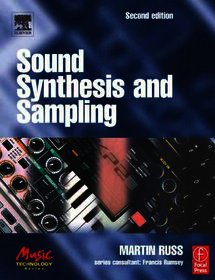
Sound Synthesis and Sampling
Sorozatcím: Music Technology;
-
10% KEDVEZMÉNY?
- Kiadói listaár GBP 35.99
-
17 194 Ft (16 375 Ft + 5% áfa)
Az ár azért becsült, mert a rendelés pillanatában nem lehet pontosan tudni, hogy a beérkezéskor milyen lesz a forint árfolyama az adott termék eredeti devizájához képest. Ha a forint romlana, kissé többet, ha javulna, kissé kevesebbet kell majd fizetnie.
- Kedvezmény(ek) 10% (cc. 1 719 Ft off)
- Kedvezményes ár 15 474 Ft (14 738 Ft + 5% áfa)
15 474 Ft

Beszerezhetőség
A kiadónál véglegesen elfogyott, nem rendelhető. Érdemes újra keresni a címmel, hátha van újabb kiadás.
Why don't you give exact delivery time?
A beszerzés időigényét az eddigi tapasztalatokra alapozva adjuk meg. Azért becsült, mert a terméket külföldről hozzuk be, így a kiadó kiszolgálásának pillanatnyi gyorsaságától is függ. A megadottnál gyorsabb és lassabb szállítás is elképzelhető, de mindent megteszünk, hogy Ön a lehető leghamarabb jusson hozzá a termékhez.
A termék adatai:
- Kiadás sorszáma 2, Revised
- Kiadó Focal Press
- Megjelenés dátuma 2004. május 27.
- ISBN 9780240516929
- Kötéstípus Puhakötés
- Terjedelem490 oldal
- Méret 246x189 mm
- Súly 943 g
- Nyelv angol
- Illusztrációk Approx. 200 illustrations 0
Kategóriák
Hosszú leírás:
Sound Synthesis and Sampling provides a comprehensive introduction to the underlying principles and practical techniques applied to both commercial and research sound synthesizers. This second edition has been rigorously updated throughout and includes a new chapter on performance, examining how synthesizers have become embedded within more sophisticated musical performance instruments.
Martin Russ' highly readable and non-mathematical approach makes the subject accessible whatever your level of experience. The book features:
? Detailed illustrations to aid your understanding
? Topics presented in bite-size sections within each chapter
? Additional notes in the margin to reinforce important points
? Examples of representative instruments and software
? Time lines showing the development of a topic in its historical context
? Questions at the end of each chapter for checking your comprehension
? A glossary for quick reference
? A jargon guide to demystify the varied terminology
As such, the book is particularly suitable for students of music technology, audio engineering, acoustics, electronics and related courses. Musicians, engineers and multimedia specialists will also want to keep a copy to hand for reference.
.
Reviews of previous edition:
"This is a very good book on the subject. It is detailed enough for the more interested student and easy enough for the average student."
Lecturer (course: Electronic Music), USA
"...A very good starting point for studying this particular subject."
Customer review, Amazon.co.uk
"...I really love this book. It is so well written, enjoyable and informative. There is no maths and everything is explained in a simple fashion."
Customer review, Amazon.com
"This book will help you on your way. A little history, not much math but a lot of help. If you intend to follow this path give this book a read!"
Customer review, Amazon.com
"The author does a fine job of presenting an extraordinary amount of material - you will learn real, in-depth background about acoustics and synthesis techniques. I find myself constantly referring to this book when I am in my studio."
Customer review, Amazon.com
"I bought this book when I first started on my Music Technology degree... I'm now just finishing my final year project, and I have to tell you... this book has been a fantastic help."
Customer review, Amazon.com
"...provides an excellent technical and historical overview of sound synthesis methods in a non-mathematical way."
Computer Music Journal
Sound Synthesis and Sampling provides a comprehensive introduction to the underlying principles and practical techniques applied to both commercial and research sound synthesizers. This second edition has been rigorously updated throughout and includes a new chapter on performance, examining how synthesizers have become embedded within more sophisticated musical performance instruments.
Martin Russ' highly readable and non-mathematical approach makes the subject accessible whatever your level of experience. The book features:
? Detailed illustrations to aid your understanding
? Topics presented in bite-size sections within each chapter
? Additional notes in the margin to reinforce important points
? Examples of representative instruments and software
? Time lines showing the development of a topic in its historical context
? Questions at the end of each chapter for checking your comprehension
? A glossary for quick reference
? A jargon guide to demystify the varied terminology
As such, the book is particularly suitable for students of music technology, audio engineering, acoustics, electronics and related courses. Musicians, engineers and multimedia specialists will also want to keep a copy to hand for reference.
.

