

-
18% KEDVEZMÉNY?
- Kiadói listaár GBP 85.00
-
38 377 Ft (36 550 Ft + 5% áfa)
Az ár azért becsült, mert a rendelés pillanatában nem lehet pontosan tudni, hogy a beérkezéskor milyen lesz a forint árfolyama az adott termék eredeti devizájához képest. Ha a forint romlana, kissé többet, ha javulna, kissé kevesebbet kell majd fizetnie.
- Kedvezmény(ek) 18% (kb. 6 907 Ft)
- Kedvezményes ár 31 470 Ft (29 971 Ft + 5% áfa)
- A kedvezmény érvényes eddig: 2026. október 31.
31 470 Ft

Beszerezhetőség
Még nem jelent meg, de rendelhető. A megjelenéstől számított néhány héten belül megérkezik.
Why don't you give exact delivery time?
A beszerzés időigényét az eddigi tapasztalatokra alapozva adjuk meg. Azért becsült, mert a terméket külföldről hozzuk be, így a kiadó kiszolgálásának pillanatnyi gyorsaságától is függ. A megadottnál gyorsabb és lassabb szállítás is elképzelhető, de mindent megteszünk, hogy Ön a lehető leghamarabb jusson hozzá a termékhez.
A termék adatai:
- Kiadó Bloomsbury Publishing (UK)
- Megjelenés dátuma 2026. szeptember 17.
- ISBN 9781666948110
- Kötéstípus Keménykötés
- Terjedelem288 oldal
- Méret 228.6x152.4 mm
- Nyelv angol 700
Kategóriák
Rövid leírás:
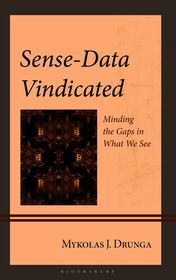
Connecting the perceptual time-gap problem with Subjective Idealism, this book argues for the existence of sense-data at the root of perceiving physical objects.
TöbbHosszú leírás:
In order to solve the perceptual time-gap problem, this book embraces Idealism and acknowledges the existence of sense-data at the root of perceiving physical objects.
Of all the multiple arguments for introducing sense-data as objects of sensory awareness, the Time-Gap Argument remains persistently puzzling. Since the Middle Ages, scholars have wondered about phenomena such as the light we see from stars far away, and the time-gap problem has resisted a definitive solution.
Examining most of the arguments advanced since the beginning of the twentieth century both for and against the admission of sense-data, Mykolas J. Drunga argues that the problem cannot be solved by denying that the things we see must exist at the time we see them or by claiming we can see deeply into the past. Instead, we will solve it by realizing that what keeps the universe in existence is an eternal spirit. This radical conclusion, in conversation with the Idealist philosophers Leibniz and Berkeley, requires taking a first indispensable step--acknowledging the existence of sense-data at the root of perceiving physical objects.
Drunga vindicates a Direct Realist Subjective Idealism, which alone allows perception of the world to be both possible and understandable. If Subjective Idealism is thus a necessary condition for the possibility and intelligibility of sensory perception, we thereby have a strong proof of Idealism's truth. Ultimately, to be just is to perceive (to be on the way toward coming to know something) or to be perceived (to be on the way toward becoming known to someone).
Tartalomjegyzék:
Preface
Chapter 1: The Time-Gap Argument
Chapter 2: The Existence and Simultaneity Requirements
Chapter 3: Denying the Simultaneity Requirement
Chapter 4: Affirming the Simultaneity Requirement
Chapter 5: What and How Do We Perceive
Bibliography
Index

