

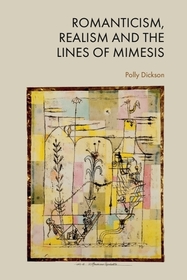
Romanticism, Realism and the Lines of Mimesis
-
8% KEDVEZMÉNY?
- A kedvezmény csak az 'Értesítés a kedvenc témákról' hírlevelünk címzettjeinek rendeléseire érvényes.
- Kiadói listaár GBP 19.99
-
9 025 Ft (8 595 Ft + 5% áfa)
Az ár azért becsült, mert a rendelés pillanatában nem lehet pontosan tudni, hogy a beérkezéskor milyen lesz a forint árfolyama az adott termék eredeti devizájához képest. Ha a forint romlana, kissé többet, ha javulna, kissé kevesebbet kell majd fizetnie.
- Kedvezmény(ek) 8% (kb. 722 Ft)
- Kedvezményes ár 8 303 Ft (7 907 Ft + 5% áfa)
Iratkozzon fel most és részesüljön kedvezőbb árainkból!
Feliratkozom
9 025 Ft

Beszerezhetőség
Becsült beszerzési idő: A Prosperónál jelenleg nincsen raktáron, de a kiadónál igen. Beszerzés kb. 3-5 hét..
A Prosperónál jelenleg nincsen raktáron.
Why don't you give exact delivery time?
A beszerzés időigényét az eddigi tapasztalatokra alapozva adjuk meg. Azért becsült, mert a terméket külföldről hozzuk be, így a kiadó kiszolgálásának pillanatnyi gyorsaságától is függ. A megadottnál gyorsabb és lassabb szállítás is elképzelhető, de mindent megteszünk, hogy Ön a lehető leghamarabb jusson hozzá a termékhez.
A termék adatai:
- Kiadó Edinburgh University Press
- Megjelenés dátuma 2026. január 1.
- ISBN 9781399506519
- Kötéstípus Puhakötés
- Terjedelem240 oldal
- Méret 234x156 mm
- Nyelv angol
- Illusztrációk 8 black and white illustrations 650
Kategóriák
Rövid leírás:
Examines the role occupied by the senses and the self in approaches to literary mimesis in nineteenth-century European literature
TöbbHosszú leírás:
Since Plato’s Republic, mimesis — the artwork’s tacit claim to reflect or imitate real life — has faced a near-constant stream of assaults, being accused of naturalising a supposedly uncomplicated relationship between world and fiction. Lines of Mimesis offers a revisionary account of mimesis. Specifically, it proposes a rethinking of the representational attitudes of two literary schools usually understood to be at odds with one another — Romanticism and Realism — through close readings of writings and drawings made by two figures usually taken to be proponents of those schools respectively: E. T. A. Hoffmann and Honoré de Balzac. Across these readings, Dickson argues that a more capacious understanding of mimesis is achieved when we understand it to pertain not to the reduplication of objects in the world, but to a negotiation of the subject’s sensory entwinement with those objects. This new understanding can, in turn, more closely illuminate an artwork’s own reflections on its relationship to the world, shedding light on the entanglements and crossovers between Romanticism and Realism.
TöbbTartalomjegyzék:
List of Figures
Acknowledgements
Notes on Abbreviations and Translations
Introduction: Balzac and Hoffman
I: Mimesis
1. Mimesis and the Chiasm
2. A Brief History of Undulating Lines
II: Lines
3. Arabesque: Der goldne Topf and La Peau de chagrin
4. Scribble: Der Artushof and Le Chef-d’oeuvre inconnu
5. Cross: Die Elixiere des Teufels and L’Élixir de longue vie
Conclusion: Fiction's Pretexts
Bibliography
Index
Több
