

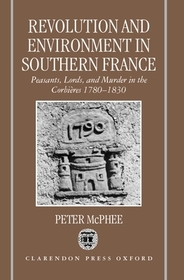
Revolution and Environment in Southern France
Peasants, Lords, and Murder in the Corbières 1780-1830
-
10% KEDVEZMÉNY?
- A kedvezmény csak az 'Értesítés a kedvenc témákról' hírlevelünk címzettjeinek rendeléseire érvényes.
- Kiadói listaár GBP 190.00
-
85 785 Ft (81 700 Ft + 5% áfa)
Az ár azért becsült, mert a rendelés pillanatában nem lehet pontosan tudni, hogy a beérkezéskor milyen lesz a forint árfolyama az adott termék eredeti devizájához képest. Ha a forint romlana, kissé többet, ha javulna, kissé kevesebbet kell majd fizetnie.
- Kedvezmény(ek) 10% (kb. 8 579 Ft)
- Kedvezményes ár 77 207 Ft (73 530 Ft + 5% áfa)
Iratkozzon fel most és részesüljön kedvezőbb árainkból!
Feliratkozom
85 785 Ft

Beszerezhetőség
Megrendelésre a kiadó utánnyomja a könyvet. Rendelhető, de a szokásosnál kicsit lassabban érkezik meg.
Why don't you give exact delivery time?
A beszerzés időigényét az eddigi tapasztalatokra alapozva adjuk meg. Azért becsült, mert a terméket külföldről hozzuk be, így a kiadó kiszolgálásának pillanatnyi gyorsaságától is függ. A megadottnál gyorsabb és lassabb szállítás is elképzelhető, de mindent megteszünk, hogy Ön a lehető leghamarabb jusson hozzá a termékhez.
A termék adatai:
- Kiadó Clarendon Press
- Megjelenés dátuma 1999. június 3.
- ISBN 9780198207177
- Kötéstípus Keménykötés
- Terjedelem288 oldal
- Méret 224x144x21 mm
- Súly 455 g
- Nyelv angol
- Illusztrációk 6 figures, 4 maps 0
Kategóriák
Rövid leírás:
In the forty years after the Revolution of 1789, the peasants and former seigneurs of the isolated and arid region of the Corbières, Languedoc, fought a protracted battle over the consequences of revolutionary change. This social conflict culminated in the murder of two nobles by a band of villagers in the aftermath of the Revolution of 1830. Professor McPhee's book offers important new perspectives on the French Revolution and its consequences.
TöbbHosszú leírás:
In the forty years after the Revolution of 1789, the peasants and former seigneurs of the isolated and arid region of the Corbières, Languedoc, fought a protracted battle over the consequences of revolutionary change. Central to this conflict was control of the rough hillsides or garrigues used as sheep pastures, which the poorer peasantry seized and cleared. This social conflict culminated in the murder of two nobles by a band of villagers in the aftermath of the Revolution of 1830.
Professor McPhee's book highlights two significant new perspectives on the Revolution of 1789. First, the actions of poorer peasants in massive land-clearance occasioned an impassioned debate about the environmental consequences of uncontrolled tree-felling. Secondly, much of the cleared land was used for vineyards, suggesting the importance of far-reaching changes initiated by the poorest sections of the community.
This concise and elegant book engages important issues in the history of rural France by analyzing in depth the impact of the French Revolution on a small region of lower Languedoc known as the Corbières ... McPhee's study breaks new ground in its analysis of the environmental impact of the Revolution on the Corbières.

