

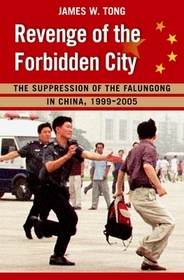
Revenge of the Forbidden City
The Suppression of the Falungong in China, 1999-2008
-
10% KEDVEZMÉNY?
- A kedvezmény csak az 'Értesítés a kedvenc témákról' hírlevelünk címzettjeinek rendeléseire érvényes.
- Kiadói listaár GBP 71.00
-
32 056 Ft (30 530 Ft + 5% áfa)
Az ár azért becsült, mert a rendelés pillanatában nem lehet pontosan tudni, hogy a beérkezéskor milyen lesz a forint árfolyama az adott termék eredeti devizájához képest. Ha a forint romlana, kissé többet, ha javulna, kissé kevesebbet kell majd fizetnie.
- Kedvezmény(ek) 10% (cc. 3 206 Ft off)
- Kedvezményes ár 28 851 Ft (27 477 Ft + 5% áfa)
Iratkozzon fel most és részesüljön kedvezőbb árainkból!
Feliratkozom
32 056 Ft

Beszerezhetőség
Megrendelésre a kiadó utánnyomja a könyvet. Rendelhető, de a szokásosnál kicsit lassabban érkezik meg.
Why don't you give exact delivery time?
A beszerzés időigényét az eddigi tapasztalatokra alapozva adjuk meg. Azért becsült, mert a terméket külföldről hozzuk be, így a kiadó kiszolgálásának pillanatnyi gyorsaságától is függ. A megadottnál gyorsabb és lassabb szállítás is elképzelhető, de mindent megteszünk, hogy Ön a lehető leghamarabb jusson hozzá a termékhez.
A termék adatai:
- Kiadó OUP USA
- Megjelenés dátuma 2009. december 10.
- ISBN 9780195377286
- Kötéstípus Keménykötés
- Terjedelem288 oldal
- Méret 152x236x22 mm
- Súly 539 g
- Nyelv angol
- Illusztrációk 15 black and white line illustrations 0
Kategóriák
Rövid leírás:
By 1999, the Falun Gong religious movement had spread widely and broadly throughout China. While on the surface its ideology of spiritual and physical cultivation did not seem threatening, the Chinese government felt otherwise. That year, the government cracked down hard on the movement, and its successful repression of it over a six year period is a textbook example of how the Chinese state operates in the face of perceived internal threats. Its success in containing the movement speaks volumes about the regime's resilience as well. Revenge of the Forbidden City is the definitive account of China's response to Falun Gong. As James Tong shows, the episode also tells us a great deal about the Chinese state's political institutions, its media apparatus, and its formidable ability to crush dissent. The result is a book that will be essential for any scholar interested in how the Chinese state actually operates.
TöbbHosszú leírás:
By 1999, the Falungong religious movement had spread widely and broadly throughout China. While on the surface its ideology of spiritual and physical cultivation did not seem threatening, the Chinese government felt otherwise. That year, the government cracked down hard on the movement, and its successful repression of it over a six year period is a textbook example of how the Chinese state operates in the face of perceived internal threats. Its success in containing the movement speaks volumes about the regime's resilience as well. Revenge of the Forbidden City is the definitive account of China's response to Falungong. As James Tong shows, the episode also tells us a great deal about the Chinese state's political institutions, its media apparatus, and its formidable ability to crush dissent. The result is a book that will be essential for any scholar interested in how the Chinese state actually operates.
China has certainly risen, but will it be free? This is the provocative question at the hub of James Tong's book. While many theories predict that modernization will weaken the state's power to monitor and punish deviance, thereby permitting pluralism to emerge, Tong subjects these assumptions to a systematic empirical test. In a comparative analysis of the 1999 campaign to eradicate Falungong, the quasi-religious exercise association, he finds the Chinese Party-state still to be suffocatingly powerful-though perhaps less so than before.
Tartalomjegyzék:
Introduction _
Preparing for the Crackdown
Law Enforcement Operations after the Crackown
The Anti-Falungong News Media Campaign
Curing the Patient - Conversion Programs
Organization Structure of the Campaign
Party Meetings Announcing the Ban
Evaluation of the Anti-Falungong Campaign
Concluding Remarks

