

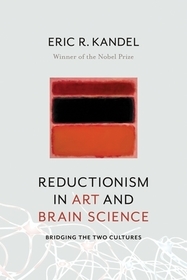
Reductionism in Art and Brain Science
Bridging the Two Cultures
-
10% KEDVEZMÉNY?
- A kedvezmény csak az 'Értesítés a kedvenc témákról' hírlevelünk címzettjeinek rendeléseire érvényes.
- Kiadói listaár GBP 25.00
-
11 287 Ft (10 750 Ft + 5% áfa)
Az ár azért becsült, mert a rendelés pillanatában nem lehet pontosan tudni, hogy a beérkezéskor milyen lesz a forint árfolyama az adott termék eredeti devizájához képest. Ha a forint romlana, kissé többet, ha javulna, kissé kevesebbet kell majd fizetnie.
- Kedvezmény(ek) 10% (cc. 1 129 Ft off)
- Kedvezményes ár 10 159 Ft (9 675 Ft + 5% áfa)
Iratkozzon fel most és részesüljön kedvezőbb árainkból!
Feliratkozom
11 287 Ft

Beszerezhetőség
A kiadónál véglegesen elfogyott, nem rendelhető. Érdemes újra keresni a címmel, hátha van újabb kiadás.
Why don't you give exact delivery time?
A beszerzés időigényét az eddigi tapasztalatokra alapozva adjuk meg. Azért becsült, mert a terméket külföldről hozzuk be, így a kiadó kiszolgálásának pillanatnyi gyorsaságától is függ. A megadottnál gyorsabb és lassabb szállítás is elképzelhető, de mindent megteszünk, hogy Ön a lehető leghamarabb jusson hozzá a termékhez.
A termék adatai:
- Kiadó Columbia University Press
- Megjelenés dátuma 2016. október 4.
- ISBN 9780231179621
- Kötéstípus Keménykötés
- Terjedelem224 oldal
- Méret 239x165x19 mm
- Súly 653 g
- Nyelv angol
- Illusztrációk w. partly col. ill. 0
Kategóriák
Hosszú leírás:
Can science and art find common ground? Are scientific and artistic quests mutually exclusive? In this new book, neuroscientist Eric Kandel, whose interests span the fields of science and art, explores how reductionism - the distillation of larger scientific or aesthetic concepts into smaller, more tractable ideas - has been used by scientists and artists alike to pursue their respective truths. Their common use of reductionist strategies demonstrates how science can inform the way we experience a work of art and seek to understand its meaning. Kandel draws on his Nobel Prize-winning work studying the neurobiological underpinnings of learning and memory in the humble sea slug, whose simple brain helps illuminate the complex workings of higher animal minds. He extends these findings to the complexities of human perception, which uses bottom-up sensory and top-down cognitive functions to perceive the world and to appreciate and understand works of art.
"Words like 'genius' or 'renaissance man' are rarely used in these egalitarian times, but such descriptions wouldn't be entirely inappropriate for Kandel, who is renowned for his work on memory. He has now written a remarkable book full of poetic insights, without compromising scientific rigor." - V. S. Ramachandran, University of California, San Diego

