

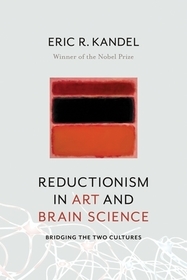
Reductionism in Art and Brain Science
Bridging the Two Cultures
- Publisher's listprice GBP 25.00
-
11 287 Ft (10 750 Ft + 5% VAT)
The price is estimated because at the time of ordering we do not know what conversion rates will apply to HUF / product currency when the book arrives. In case HUF is weaker, the price increases slightly, in case HUF is stronger, the price goes lower slightly.
- Discount 10% (cc. 1 129 Ft off)
- Discounted price 10 159 Ft (9 675 Ft + 5% VAT)
Subcribe now and take benefit of a favourable price.
Subscribe
11 287 Ft

Availability
Out of print
Why don't you give exact delivery time?
Delivery time is estimated on our previous experiences. We give estimations only, because we order from outside Hungary, and the delivery time mainly depends on how quickly the publisher supplies the book. Faster or slower deliveries both happen, but we do our best to supply as quickly as possible.
Product details:
- Publisher Columbia University Press
- Date of Publication 4 October 2016
- ISBN 9780231179621
- Binding Hardback
- No. of pages224 pages
- Size 239x165x19 mm
- Weight 653 g
- Language English
- Illustrations w. partly col. ill. 0
Categories
Long description:
Can science and art find common ground? Are scientific and artistic quests mutually exclusive? In this new book, neuroscientist Eric Kandel, whose interests span the fields of science and art, explores how reductionism - the distillation of larger scientific or aesthetic concepts into smaller, more tractable ideas - has been used by scientists and artists alike to pursue their respective truths. Their common use of reductionist strategies demonstrates how science can inform the way we experience a work of art and seek to understand its meaning. Kandel draws on his Nobel Prize-winning work studying the neurobiological underpinnings of learning and memory in the humble sea slug, whose simple brain helps illuminate the complex workings of higher animal minds. He extends these findings to the complexities of human perception, which uses bottom-up sensory and top-down cognitive functions to perceive the world and to appreciate and understand works of art.
"Words like 'genius' or 'renaissance man' are rarely used in these egalitarian times, but such descriptions wouldn't be entirely inappropriate for Kandel, who is renowned for his work on memory. He has now written a remarkable book full of poetic insights, without compromising scientific rigor." - V. S. Ramachandran, University of California, San Diego

