

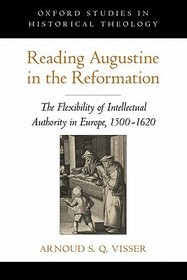
Reading Augustine in the Reformation
The Flexibility of Intellectual Authority in Europe, 1500-1620
Sorozatcím: Oxford Studies in Historical Theology;
-
10% KEDVEZMÉNY?
- A kedvezmény csak az 'Értesítés a kedvenc témákról' hírlevelünk címzettjeinek rendeléseire érvényes.
- Kiadói listaár GBP 120.00
-
54 180 Ft (51 600 Ft + 5% áfa)
Az ár azért becsült, mert a rendelés pillanatában nem lehet pontosan tudni, hogy a beérkezéskor milyen lesz a forint árfolyama az adott termék eredeti devizájához képest. Ha a forint romlana, kissé többet, ha javulna, kissé kevesebbet kell majd fizetnie.
- Kedvezmény(ek) 10% (kb. 5 418 Ft)
- Kedvezményes ár 48 762 Ft (46 440 Ft + 5% áfa)
Iratkozzon fel most és részesüljön kedvezőbb árainkból!
Feliratkozom
54 180 Ft

Beszerezhetőség
Megrendelésre a kiadó utánnyomja a könyvet. Rendelhető, de a szokásosnál kicsit lassabban érkezik meg.
Why don't you give exact delivery time?
A beszerzés időigényét az eddigi tapasztalatokra alapozva adjuk meg. Azért becsült, mert a terméket külföldről hozzuk be, így a kiadó kiszolgálásának pillanatnyi gyorsaságától is függ. A megadottnál gyorsabb és lassabb szállítás is elképzelhető, de mindent megteszünk, hogy Ön a lehető leghamarabb jusson hozzá a termékhez.
A termék adatai:
- Kiadó OUP USA
- Megjelenés dátuma 2011. június 9.
- ISBN 9780199765935
- Kötéstípus Keménykötés
- Terjedelem256 oldal
- Méret 236x157x22 mm
- Súly 522 g
- Nyelv angol 0
Kategóriák
Rövid leírás:
Augustine of Hippo (354-430 AD) was regarded by sixteenth century Europe as one of the most contested religious and philosophical authorities. Through deep examination of the production, circulation and consumption of Augustine's works, Arnoud Visser reveals the wildly contrasting ways in which he was read and appropriated by publishers, humanist scholars, and individual readers.
TöbbHosszú leírás:
Augustine of Hippo (354-430 AD) was regarded by sixteenth century Europe as one of the most contested religious and philosophical authorities. He was cast as a characteristically Lutheran, Catholic, or Calvinist thinker, and even as the ideal Erasmian pastor. These wildly contrasting receptions raise crucial questions about the significance of Augustine's thought in the Reformation period. They also show the complex relationship between religious change and the new intellectual culture of Renaissance humanism.
Drawing on a variety of printed and manuscript sources, Arnoud Visser breaks new ground in three ways. He systematically grounds Augustine's theological reception in the history of reading and the material culture of books and manuscripts. He does not confine his examination to particular confessional parties or specific geographic boundaries, but offers a cross-confessional account of Augustine's appropriation in early modern Europe. Finally, he provides crucial insight into the nature of intellectual authority in the early modern period.
Central in this study are the production, circulation and consumption of Augustine's works. Visser examines the impact of the new art of print, the rise of humanist scholarship, and the emerging confessional divisions on Augustine's reception. He shows how editors navigated a wealth of patristic information by using search tools and anthologies. He also explains how individual readers used their copies and how they applied their knowledge in public debates alongside other media of communication. Reading Augustine in the Reformation argues that the emerging confessional pressures did not restrict intellectual life, as has often been claimed, but promoted new scholarship.
Visser has produced a careful and thought-provoking study of the range of ways in which Augustines works were made available to and appropriated by theologians during the sixteenth century.
Tartalomjegyzék:
List of Abbreviations
List of Figures
Introduction
Part 1: Production
Chapter 1. The Arrival of the Printing Press
Chapter 2. Humanist Scholarship and Editorial Guidance
Chapter 3. Augustine after Trent
Part 2: Dissemination
Chapter 4. How to Find the Right Argument: Bibliographies and Indexes
Chapter 5. Customizing Authority: Anthologies and Epitomes
Part 3: Consumption
Chapter 6. How Readers Read Their Augustines
Chapter 7. Patristics and Public Debate
Epilogue
Appendix: Opera omnia editions of Augustine 1500-1620
Notes
Bibliography
Index

