

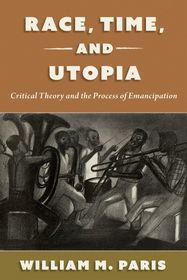
Race, Time, and Utopia
Critical Theory and the Process of Emancipation
Sorozatcím: Philosophy of Race;
-
10% KEDVEZMÉNY?
- A kedvezmény csak az 'Értesítés a kedvenc témákról' hírlevelünk címzettjeinek rendeléseire érvényes.
- Kiadói listaár GBP 23.99
-
10 831 Ft (10 315 Ft + 5% áfa)
Az ár azért becsült, mert a rendelés pillanatában nem lehet pontosan tudni, hogy a beérkezéskor milyen lesz a forint árfolyama az adott termék eredeti devizájához képest. Ha a forint romlana, kissé többet, ha javulna, kissé kevesebbet kell majd fizetnie.
- Kedvezmény(ek) 10% (cc. 1 083 Ft off)
- Kedvezményes ár 9 748 Ft (9 284 Ft + 5% áfa)
Iratkozzon fel most és részesüljön kedvezőbb árainkból!
Feliratkozom
10 831 Ft

Beszerezhetőség
Megrendelésre a kiadó utánnyomja a könyvet. Rendelhető, de a szokásosnál kicsit lassabban érkezik meg.
Why don't you give exact delivery time?
A beszerzés időigényét az eddigi tapasztalatokra alapozva adjuk meg. Azért becsült, mert a terméket külföldről hozzuk be, így a kiadó kiszolgálásának pillanatnyi gyorsaságától is függ. A megadottnál gyorsabb és lassabb szállítás is elképzelhető, de mindent megteszünk, hogy Ön a lehető leghamarabb jusson hozzá a termékhez.
A termék adatai:
- Kiadó OUP USA
- Megjelenés dátuma 2025. április 23.
- ISBN 9780197698877
- Kötéstípus Puhakötés
- Terjedelem272 oldal
- Méret 201x119x22 mm
- Súly 272 g
- Nyelv angol 581
Kategóriák
Rövid leírás:
Racial injustice, at its core, is the domination of time. The racially dominated are not free to define what counts as "progress," they are not free from the accumulation of past injustices, and, most importantly, they are not free from the arbitrary organization of work in capitalist labor markets. Utopia has been one response to this domination. William Paris here provides a theoretical account of utopia as the critical analysis of the sources of time domination, and the struggle to create emancipatory forms of life. He analyses the neglected "utopian" tradition of justice in black political thought that insists justice can only be secured through the transformation of society as a whole. Bringing into conversation the work of W.E.B Du Bois, Martin Delany, Marcus Garvey, Frantz Fanon, and James Boggs with the critical theory of Karl Marx, Ernst Bloch, Rahel Jaeggi, and Rainer Forst, Paris reconstructs a social theory and normative account of forms of life as the struggle over how time will be organized, asking "Can there be freedom without a new order of time?"
TöbbHosszú leírás:
Racial injustice, at its core, is the domination of time. Utopia has been one response to this domination. The racially dominated are not free to define what counts as "progress," they are not free from the accumulation of past injustices, and, most importantly, they are not free from the arbitrary organization of work in capitalist labor markets. Racially unjust societies are forms of life where the justifications for how to organize time around life, labor, and leisure are out of the hands of the dominated. In Race, Time, and Utopia, William Paris provides a theoretical account of utopia as the critical analysis of the sources of time domination and the struggle to create emancipatory forms of life.
Rather than focusing on inclusion and equality before the law, as found in liberal theories of racial injustice, Paris analyses the neglected "utopian" tradition of justice in black political thought that insists justice can only be secured through the transformation of society as a whole. This transformation is nothing less than the democratic transformation of how organize and narrate our shared time. Bringing into conversation the work W.E.B Du Bois, Martin Delany, Marcus Garvey, Frantz Fanon, and James Boggs with the critical theory of Karl Marx, Ernst Bloch, Rahel Jaeggi, and Rainer Forst, Paris reconstructs a social theory and normative account of forms of life as the struggle over how time will be organized, asking "Can there be freedom without a new order of time?"
Race, Time, and Utopia: Critical Theory and the Process of Emancipation, philosopher William M. Paris makes an important contribution to several related conversations. Paris's book offers one of the richest and most well-grounded recent accounts of utopia, firmly centering the question of class struggle and his distinctive understanding of race. The book is an attempt to reconstruct and interrogate "utopian tendencies that have been immanent in historical processes of emancipation from racial domination." This is a multifaceted project that presents a new and exciting understanding of political and economic emancipation, drawing heavily on both the theorists of hope and utopia and the Black radical tradition generally.
Tartalomjegyzék:
Introduction
Chapter 1: Racial Justice and the Problem of Consciousness
Chapter 2: Race and the Fragmentation of Social Time: Critical Theory and the Utopian Hermeneutics of Souls
Chapter 3: Contesting the Polity: Black Nationalism, Utopia and the Reconstruction of Racial Life
Chapter 4: Racial Fetishism and the Alienation of Time: A Fanonian Critical Theory of Utopia
Chapter 5: Justifying Freedom: James Boggs and the Utopia of Black Power
Conclusion

