

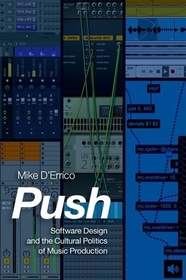
Push
Software Design and the Cultural Politics of Music Production
-
10% KEDVEZMÉNY?
- A kedvezmény csak az 'Értesítés a kedvenc témákról' hírlevelünk címzettjeinek rendeléseire érvényes.
- Kiadói listaár GBP 29.49
-
13 314 Ft (12 680 Ft + 5% áfa)
Az ár azért becsült, mert a rendelés pillanatában nem lehet pontosan tudni, hogy a beérkezéskor milyen lesz a forint árfolyama az adott termék eredeti devizájához képest. Ha a forint romlana, kissé többet, ha javulna, kissé kevesebbet kell majd fizetnie.
- Kedvezmény(ek) 10% (kb. 1 331 Ft)
- Kedvezményes ár 11 983 Ft (11 412 Ft + 5% áfa)
Iratkozzon fel most és részesüljön kedvezőbb árainkból!
Feliratkozom
13 314 Ft

Beszerezhetőség
Becsült beszerzési idő: A Prosperónál jelenleg nincsen raktáron, de a kiadónál igen. Beszerzés kb. 3-5 hét..
A Prosperónál jelenleg nincsen raktáron.
Why don't you give exact delivery time?
A beszerzés időigényét az eddigi tapasztalatokra alapozva adjuk meg. Azért becsült, mert a terméket külföldről hozzuk be, így a kiadó kiszolgálásának pillanatnyi gyorsaságától is függ. A megadottnál gyorsabb és lassabb szállítás is elképzelhető, de mindent megteszünk, hogy Ön a lehető leghamarabb jusson hozzá a termékhez.
A termék adatai:
- Kiadó OUP USA
- Megjelenés dátuma 2022. április 29.
- ISBN 9780190943318
- Kötéstípus Puhakötés
- Terjedelem336 oldal
- Méret 226x150x22 mm
- Súly 476 g
- Nyelv angol
- Illusztrációk 115 figures 183
Kategóriák
Rövid leírás:
Push: Software Design and the Cultural Politics of Music Production shows how music software has shaped the production techniques and performance practices of artists working across media, while also providing a model for understanding software as a microcosm for the increasing convergence of globalization, neoliberal capitalism, and techno-utopianism that has come to define our digital lives
TöbbHosszú leírás:
Push: Software Design and the Cultural Politics of Music Production shows how changes in the design of music software in the first decades of the twenty-first century shaped the production techniques and performance practices of artists working across media, from hip-hop and electronic dance music to video games and mobile apps. Emerging alongside developments in digital music distribution such as peer-to-peer file sharing and the MP3 format, digital audio workstations like FL Studio and Ableton Live introduced design affordances that encouraged rapid music creation workflows through flashy, "user-friendly" interfaces. Meanwhile, software such as Avid's Pro Tools attempted to protect its status as the "industry standard," "professional" DAW of choice by incorporating design elements from pre-digital music technologies. Other software, like Cycling 74's Max, asserted its alterity to "commercial" DAWs by presenting users with nothing but a blank screen.
These are more than just aesthetic design choices. Push examines the social, cultural, and political values designed into music software, and how those values become embodied by musical communities through production and performance. It reveals ties between the maximalist design of FL Studio, skeuomorphic design in Pro Tools, and gender inequity in the music products industry. It connects the computational thinking required by Max, as well as iZotope's innovations in artificial intelligence, with the cultural politics of Silicon Valley's "design thinking." Finally, it thinks through what happens when software becomes hardware, and users externalize their screens through the use of MIDI controllers, mobile media, and video game controllers. Amidst the perpetual upgrade culture of music technology, Push provides a model for understanding software as a microcosm for the increasing convergence of globalization, neoliberal capitalism, and techno-utopianism that has come to define our digital lives.
A thoughtful and comprehensive look at digital musicianship in all its many layers and contexts.
Tartalomjegyzék:
Acknowledgements
About the Companion Website
Introduction: Interface Aesthetics
PART ONE: Sonic Architectures
1. Plugin Cultures
2. Monopolies of Competence
3. Terminal Aesthetics
PART TWO: When Hardware Becomes Software
4. Controller Cultures
5. There's an App for That
PART THREE: Software as Gradual Process
6. Worlds of Sound
7. Deep Listening
Conclusion: Invisible Futures
References
Index

