

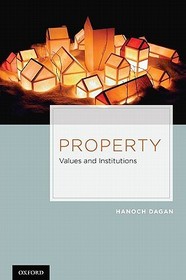
Property
Values and Institutions
-
10% KEDVEZMÉNY?
- A kedvezmény csak az 'Értesítés a kedvenc témákról' hírlevelünk címzettjeinek rendeléseire érvényes.
- Kiadói listaár GBP 145.00
-
65 467 Ft (62 350 Ft + 5% áfa)
Az ár azért becsült, mert a rendelés pillanatában nem lehet pontosan tudni, hogy a beérkezéskor milyen lesz a forint árfolyama az adott termék eredeti devizájához képest. Ha a forint romlana, kissé többet, ha javulna, kissé kevesebbet kell majd fizetnie.
- Kedvezmény(ek) 10% (cc. 6 547 Ft off)
- Kedvezményes ár 58 921 Ft (56 115 Ft + 5% áfa)
Iratkozzon fel most és részesüljön kedvezőbb árainkból!
Feliratkozom
65 467 Ft

Beszerezhetőség
Megrendelésre a kiadó utánnyomja a könyvet. Rendelhető, de a szokásosnál kicsit lassabban érkezik meg.
Why don't you give exact delivery time?
A beszerzés időigényét az eddigi tapasztalatokra alapozva adjuk meg. Azért becsült, mert a terméket külföldről hozzuk be, így a kiadó kiszolgálásának pillanatnyi gyorsaságától is függ. A megadottnál gyorsabb és lassabb szállítás is elképzelhető, de mindent megteszünk, hogy Ön a lehető leghamarabb jusson hozzá a termékhez.
A termék adatai:
- Kiadó OUP USA
- Megjelenés dátuma 2011. március 17.
- ISBN 9780199737864
- Kötéstípus Keménykötés
- Terjedelem352 oldal
- Méret 239x160x30 mm
- Súly 635 g
- Nyelv angol 0
Kategóriák
Rövid leírás:
In Property: Values and Institutions, Hanoch Dagan covers numerous property issues to provide a liberal theory of property. The three parts in this book, Property, State, and Community are inter-connected. He analyzes the interactions between landowners and governments (both eminent domain and regulatory takings) and those regulating the governance of property owned by multiple individuals (such as co-ownership, marital property, and the law of common interest communities). He also places emphasis on groups and views property law from a broad institutional perspective to show that property law serves as the foundation for the organization of various types of groups and communities.
TöbbHosszú leírás:
Property: Values and Institutions, by Hanoch Dagan, offers an original understanding of property, different from the dominant voices in the field, yet loyal to the practice of property. It rejects the misleading dominant binarism in which property is either one monistic form, structured around Blackstone's (in)famous formula of sole and despotic dominion, or a formless bundle of rights. Instead, it conceptualizes property as an umbrella for a set of institutions bearing a mutual family resemblance. It resists the prevailing tendency to discuss property through the prism of only one particular value, notably efficiency. Dagan argues that property can, and should, serve a pluralistic set of liberal values. These property values include not only autonomy and utility, which are emphasized by many contemporary scholars, but also labor, personhood, community, and distributive justice.
Dagan claims that property law, at least at its best, tailors different configurations of entitlements to different property institutions, with each such institution designed to match the specific balance between property values best suited to its characteristic social setting. Dagan develops this theoretical account and applies it to key doctrinal contexts. In particular, he analyzes the normative underpinnings of the doctrines regulating the interactions between landowners and governments (both eminent domain and regulatory takings doctrines) and those regulating the governance of property owned by multiple owners (such as co-ownership, marital property, and the law of common interest communities).
Tartalomjegyzék:
Prologue: Property and Realism
Part One: Property
1. The Craft of Property
2. Exclusion and Inclusion in Property
3. From Independence and Interdependence to the Pluralism of Property
4. Property and the Public Domain
Part Two: State
5. Takings and Distributive Justice
6. Just Compensation, Incentives, and Social Meanings
7. Re-Imagining Takings Law
Part Three: Community
8. The Liberal Commons
9. Properties of Marriage
10. Conflicts in Property

