

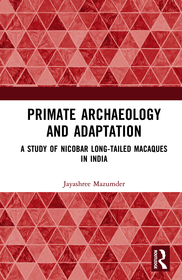
Primate Archaeology and Adaptation
A Study of Nicobar Long-Tailed Macaques in India
-
10% KEDVEZMÉNY?
- Kiadói listaár GBP 171.99
-
77 653 Ft (73 955 Ft + 5% áfa)
Az ár azért becsült, mert a rendelés pillanatában nem lehet pontosan tudni, hogy a beérkezéskor milyen lesz a forint árfolyama az adott termék eredeti devizájához képest. Ha a forint romlana, kissé többet, ha javulna, kissé kevesebbet kell majd fizetnie.
- Kedvezmény(ek) 10% (kb. 7 766 Ft)
- Kedvezményes ár 69 887 Ft (66 560 Ft + 5% áfa)
69 887 Ft

Beszerezhetőség
Becsült beszerzési idő: A Prosperónál jelenleg nincsen raktáron, de a kiadónál igen. Beszerzés kb. 3-5 hét..
A Prosperónál jelenleg nincsen raktáron.
Why don't you give exact delivery time?
A beszerzés időigényét az eddigi tapasztalatokra alapozva adjuk meg. Azért becsült, mert a terméket külföldről hozzuk be, így a kiadó kiszolgálásának pillanatnyi gyorsaságától is függ. A megadottnál gyorsabb és lassabb szállítás is elképzelhető, de mindent megteszünk, hogy Ön a lehető leghamarabb jusson hozzá a termékhez.
A termék adatai:
- Kiadás sorszáma 1
- Kiadó Routledge
- Megjelenés dátuma 2026. augusztus 30.
- ISBN 9781041014010
- Kötéstípus Keménykötés
- Terjedelem218 oldal
- Méret 229x152 mm
- Súly 560 g
- Nyelv angol
- Illusztrációk 30 Illustrations, black & white; 30 Halftones, black & white; 4 Tables, black & white 699
Kategóriák
Rövid leírás:
Primate Archaeology and Adaptation offers an interdisciplinary examination of Nicobar long-tailed macaques, situating their tool use, social behavior, and ecological flexibility within deep evolutionary time and contemporary conservation challenges.
TöbbHosszú leírás:
Primate Archaeology and Adaptation offers an interdisciplinary examination of Nicobar long-tailed macaques, situating their tool use, social behavior, and ecological flexibility within deep evolutionary time and contemporary conservation challenges. It documents the ecology, social organization, and behavioral repertoire of long-tailed macaques across Southeast Asia, including foraging strategies, food sharing, reproductive dynamics, exploratory behavior, and diverse forms of object manipulation. The book presents detailed accounts of tool-related behaviors, such as leaf ‘glove’ use, substrate selection for pounding, and the innovative use of anthropogenic materials, while carefully distinguishing between tool use and broader object use. By bridging fossil history, behavioral ecology, and archaeological method, it rethinks material culture beyond humans.
This book will interest scholars and advanced students in biological anthropology, primatology, archaeology, human evolution, animal behavior, and conservation studies. It will also appeal to researchers working on material culture, island ecology, and South Asian environmental policy.
TöbbTartalomjegyzék:
Chapter 1: Primate Archaeology across India and Abroad
Chapter 2: Knowing the Islands and the Animal
Chapter 3: Food and Foraging Behavior of Nicobar Long-Tailed Macaques
Chapter 4: Social Behavior, Exploration, and Context-dependent Behavioral Responses in Long-tailed Macaques
Chapter 5: Macaque Social and Reproductive Behavior
Chapter 6: Tool-use and Culture, Discovering Newness and Local Vibes: Lasting Traits and Vanished Details
Chapter 7: Conservation and the Future of Tool-Use Behavior and Cultural Heritage in Nicobar Macaques
Több
