

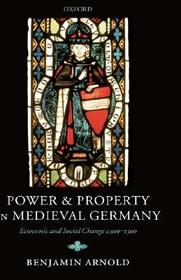
Power and Property in Medieval Germany
Economic and Social Change c.900-1300
-
15% KEDVEZMÉNY?
- A kedvezmény csak az 'Értesítés a kedvenc témákról' hírlevelünk címzettjeinek rendeléseire érvényes.
- Kiadói listaár GBP 195.00
-
88 042 Ft (83 850 Ft + 5% áfa)
Az ár azért becsült, mert a rendelés pillanatában nem lehet pontosan tudni, hogy a beérkezéskor milyen lesz a forint árfolyama az adott termék eredeti devizájához képest. Ha a forint romlana, kissé többet, ha javulna, kissé kevesebbet kell majd fizetnie.
- Kedvezmény(ek) 15% (cc. 0 Ft off)
- Kedvezményes ár 74 836 Ft (71 273 Ft + 5% áfa)
- A kedvezmény érvényes eddig: 2026. augusztus 5.
Iratkozzon fel most és részesüljön kedvezőbb árainkból!
Feliratkozom
88 042 Ft

Beszerezhetőség
Megrendelésre a kiadó utánnyomja a könyvet. Rendelhető, de a szokásosnál kicsit lassabban érkezik meg.
Why don't you give exact delivery time?
A beszerzés időigényét az eddigi tapasztalatokra alapozva adjuk meg. Azért becsült, mert a terméket külföldről hozzuk be, így a kiadó kiszolgálásának pillanatnyi gyorsaságától is függ. A megadottnál gyorsabb és lassabb szállítás is elképzelhető, de mindent megteszünk, hogy Ön a lehető leghamarabb jusson hozzá a termékhez.
A termék adatai:
- Kiadó OUP Oxford
- Megjelenés dátuma 2004. szeptember 30.
- ISBN 9780199272211
- Kötéstípus Keménykötés
- Terjedelem240 oldal
- Méret 224x145x17 mm
- Súly 389 g
- Nyelv angol 0
Kategóriák
Rövid leírás:
In Power and Property in Medieval Germany Professor Arnold takes a fresh look at the problems posed by power and property in a medieval society, in this case the German kingdom. In a series of interrelated studies, Arnold explains the ongoing social and economic relationships between classes and institutions, peasants and lords, the royal court, towns and townsfolk, and the Church and aristocracy.
TöbbHosszú leírás:
In Power and Property in Medieval Germany Professor Arnold takes a fresh look at the problems posed by power and property in a medieval society, in this case the German kingdom. In a series of interrelated studies covering the period 700-1500, but concentrating on the tenth to thirteenth centuries, Arnold explores the social and economic changes that influenced the real lives of people living in Germany.
A number of themes are examined, including the kind of society that emerged along the Rhine and to the east of it in a period when it is hard to identify a Germany; the complex relationship between peasant and lord; the finances and resources of the German crown, the largest single landowner; the social and economic impact of the urban milieu with its towns large and small; and the entanglement of Church and aristocracy.
Whilst medieval people did not share mercantilist or post-Adam Smith concepts of economic forces at work in society, Arnold fruitfully applies the ideas and rationalizations of modern economics to medieval evidence, leading, at times, to unexpected conclusions.
Benjamin Arnold is the leading English-speaking authority on the history of medieval Germany.
Tartalomjegyzék:
Introduction
The German Lands 700-1100
Peasants, Lords, and their Resources
The German Crown and its Assets
The Urban Milieu and Civic States
Property, Piety, and Castles
Conclusion
Select Bibliography

