

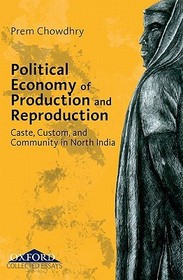
Political Economy of Production and Reproduction
-
10% KEDVEZMÉNY?
- A kedvezmény csak az 'Értesítés a kedvenc témákról' hírlevelünk címzettjeinek rendeléseire érvényes.
- Kiadói listaár GBP 40.00
-
18 060 Ft (17 200 Ft + 5% áfa)
Az ár azért becsült, mert a rendelés pillanatában nem lehet pontosan tudni, hogy a beérkezéskor milyen lesz a forint árfolyama az adott termék eredeti devizájához képest. Ha a forint romlana, kissé többet, ha javulna, kissé kevesebbet kell majd fizetnie.
- Kedvezmény(ek) 10% (kb. 1 806 Ft)
- Kedvezményes ár 16 254 Ft (15 480 Ft + 5% áfa)
Iratkozzon fel most és részesüljön kedvezőbb árainkból!
Feliratkozom
18 060 Ft

Beszerezhetőség
Bizonytalan a beszerezhetőség. Érdemes még egyszer keresni szerzővel és címmel. Ha nem talál másik, kapható kiadást, forduljon ügyfélszolgálatunkhoz!
Why don't you give exact delivery time?
A beszerzés időigényét az eddigi tapasztalatokra alapozva adjuk meg. Azért becsült, mert a terméket külföldről hozzuk be, így a kiadó kiszolgálásának pillanatnyi gyorsaságától is függ. A megadottnál gyorsabb és lassabb szállítás is elképzelhető, de mindent megteszünk, hogy Ön a lehető leghamarabb jusson hozzá a termékhez.
A termék adatai:
- Kiadó OUP India
- Megjelenés dátuma 2011. február 3.
- ISBN 9780198067702
- Kötéstípus Keménykötés
- Terjedelem464 oldal
- Méret 222x146x35 mm
- Súly 664 g
- Nyelv angol 0
Kategóriák
Rövid leírás:
This volume discusses how the process of political democratization and radically altered legal enactments, especially relating to marriage and inheritance, have changed the dynamics of power relations, primarily in North India.
TöbbHosszú leírás:
In post-colonial India, the process of political democratization and radically altered legal enactments, especially relating to marriage and inheritance, have changed the dynamics of power relations. The essays included in this volume are selected with a view to achieve an understanding of contemporary north India, along with all its social, familial, and legal contradictions. Spanning the mid nineteenth to the twenty-first century, the author presents a special case
study of Haryana. This elucidates how the richest regions in the area continue to be regressive instead of moving towards the modern egalitarian statehood. The in-depth analysis, however, is broadly applicable to the whole of northern India in sharing socio-cultural concerns.
The new, greatly liberalized, political economy of the post-Green revolution; globalization marked by conspicuous consumption; and the quasi-urbanization that rural north India has undergone; have all had their fall-out on rural society. These have led to new class formations, westernization, and changes in the notions of social status and power relations. They have, in turn, impacted familial, inter-generation, and gender relations.

