

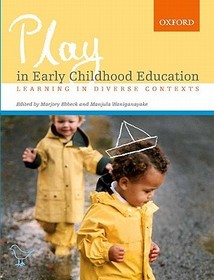
Play in Early Childhood Education
Facilitating Learning in Diverse Contexts
-
10% KEDVEZMÉNY?
- A kedvezmény csak az 'Értesítés a kedvenc témákról' hírlevelünk címzettjeinek rendeléseire érvényes.
- Kiadói listaár GBP 56.99
-
25 730 Ft (24 505 Ft + 5% áfa)
Az ár azért becsült, mert a rendelés pillanatában nem lehet pontosan tudni, hogy a beérkezéskor milyen lesz a forint árfolyama az adott termék eredeti devizájához képest. Ha a forint romlana, kissé többet, ha javulna, kissé kevesebbet kell majd fizetnie.
- Kedvezmény(ek) 10% (cc. 2 573 Ft off)
- Kedvezményes ár 23 157 Ft (22 055 Ft + 5% áfa)
Iratkozzon fel most és részesüljön kedvezőbb árainkból!
Feliratkozom
25 730 Ft

Beszerezhetőség
Bizonytalan a beszerezhetőség. Érdemes még egyszer keresni szerzővel és címmel. Ha nem talál másik, kapható kiadást, forduljon ügyfélszolgálatunkhoz!
Why don't you give exact delivery time?
A beszerzés időigényét az eddigi tapasztalatokra alapozva adjuk meg. Azért becsült, mert a terméket külföldről hozzuk be, így a kiadó kiszolgálásának pillanatnyi gyorsaságától is függ. A megadottnál gyorsabb és lassabb szállítás is elképzelhető, de mindent megteszünk, hogy Ön a lehető leghamarabb jusson hozzá a termékhez.
A termék adatai:
- Kiadó OUP Australia & New Zealand
- Megjelenés dátuma 2010. július 29.
- ISBN 9780195569049
- Kötéstípus Puhakötés
- Terjedelem352 oldal
- Méret 276x210x18 mm
- Súly 876 g
- Nyelv angol 0
Kategóriák
Hosszú leírás:
The topic of play is fundamental to an understanding of how children grow and learn. Although the importance ofplay has not diminished over time, there are many contested views about what play means and how it should be provided for in a multiplicity of early childhood contexts. There is recognition amongst early childhood educators that young children's play and learning is dynamic and highly complex. Rapidly changing and contemporary societal contexts where
children are raised and educated also demand that diverse approaches to play based learning must be considered and updated in meaningful ways.
The importance of play has been recognised in the current Australian Government reforms in early childhood education and the foundation documents of the development of the Early Childhood national curriculum have stated the fundamental importance of play.
This book is an essential introduction to the theory of play and its importance inchildren's development and learning. Current research is used to inform applications to day-to-day curriculum practice in early childhood settings throughout Australia.
This book will consider learning theories, professional practice and government policy on children's play during early childhood. There will be a focus on catering for the needs of children including those from culturally diverse backgrounds. Indigenous Australian contexts of play and learning will be a chapter with play being a whole community activity within Indigenous communities. Likewise, the cultural diversity of families from immigrant and refugee backgrounds require respect and
understanding and will be addressed throughout the book. When taken together, this book enables us to connect the national with the global, through a series of exciting and powerful studies on the challenges, insights and possibilities if play based learning and teaching during early childhood.
The book draws on a range of experts who have current views, knowledge and understanding of research in play, each writing from a position of personal expertise and comfort, and thereby enriching the depth of knowledge and understanding to be shared with readers.
Making this text user-friendly to the diversity of students we encounter in Australian universities is an important consideration in preparing this book.
Tartalomjegyzék:
Acknowledgements
About the authord
Notes on how to use this text
PART 1: PLAY AND DEVELOPMENT
Perspectives on play in a changing world
Infants and toddlers and the power of play in developing young minds
Knowing me - knowing you: the relationship dynamics of infant play
Play and literacy pedagogies for preschool and early Years settings
Play for learning and transition to school
Emergence of child leadership through play in early childhood
Landscapes for play and story
PART 2: PLAY IN ACTION IN DIVERSE ENVIRONMENTS
Reconsidering the play/work dicotomy in pedagogy
Play and the Reggio Emilia Approach in preschools
Possibilities and pitfalls of techno-toys and digital play in mathematics learning
Children redefine learning in science through play
PART 3: FAMILIES, COMMUNITIES AND PLAY
Playing as becoming: sharing Australian Aboriginal voices on play
Children's work and play: The interconnected contexts for their learning
Play and cultural transition
Promoting intercultural competence through technology-based play
Play: Some concluding reflections
Bibliography
Index

