

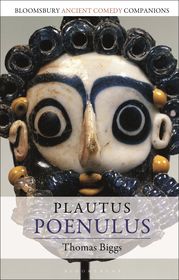
Plautus: Poenulus
Sorozatcím: Bloomsbury Ancient Comedy Companions;
-
18% KEDVEZMÉNY?
- Kiadói listaár GBP 75.00
-
33 862 Ft (32 250 Ft + 5% áfa)
Az ár azért becsült, mert a rendelés pillanatában nem lehet pontosan tudni, hogy a beérkezéskor milyen lesz a forint árfolyama az adott termék eredeti devizájához képest. Ha a forint romlana, kissé többet, ha javulna, kissé kevesebbet kell majd fizetnie.
- Kedvezmény(ek) 18% (cc. 6 095 Ft off)
- Kedvezményes ár 27 767 Ft (26 445 Ft + 5% áfa)
- A kedvezmény érvényes eddig: 2026. augusztus 31.
27 767 Ft

Beszerezhetőség
Megrendelésre a kiadó utánnyomja a könyvet. Rendelhető, de a szokásosnál kicsit lassabban érkezik meg.
Why don't you give exact delivery time?
A beszerzés időigényét az eddigi tapasztalatokra alapozva adjuk meg. Azért becsült, mert a terméket külföldről hozzuk be, így a kiadó kiszolgálásának pillanatnyi gyorsaságától is függ. A megadottnál gyorsabb és lassabb szállítás is elképzelhető, de mindent megteszünk, hogy Ön a lehető leghamarabb jusson hozzá a termékhez.
A termék adatai:
- Kiadó Bloomsbury Publishing (UK)
- Megjelenés dátuma 2026. július 9.
- Kötetek száma Hardback
- ISBN 9781350379060
- Kötéstípus Keménykötés
- Terjedelem208 oldal
- Méret 218x138x18 mm
- Súly 360 g
- Nyelv angol
- Illusztrációk 11 bw illus 0
Kategóriák
Hosszú leírás:
Plautus' Poenulus (The Little Carthaginian) is a work of staggering literary and
historical significance. Performed in the long shadow of Rome's struggle with
Hannibal's Carthage, this play stages the restoration of a Carthaginian family
divided through enslavement. Set against the backdrop of a Greece marked by
comedic expectations and the geography of contemporary imperial conquest,
Poenulus presents a tale of Carthaginian heartbreak and heartache to a postwar
Roman audience. The comedy's remarkable diversity prompts audience
interaction with a wide range of socio-cultural topics relevant to Plautus' time.
Engaging weighty matters through song, slapstick, puns, and spectacle, Poenulus
may appear to defang, but its bite is deep.
This book offers an innovative understanding of Poenulus' place in Roman history
and literary culture, helping readers to appreciate the play itself, the complex
nature of Plautine authorship, and the cultures of performance in Republican
Rome. Most of the book explores the play as a performance, from its unique and
strikingly self-aware prologue to the actors' call for applause in the final line.
The longest chapter examines the play's afterlives in the Renaissance and early
modern period, including little-known revivals and adaptations in Ferrara, Rome,
and Cambridge. Over the centuries, people have found in Poenulus a script well
suited to active learning in the Latin classroom, a text capable of supporting
new political ideologies, and a dramatized vision of the world that accorded
with processes of racialization in Europe as reengagement with the classical past
coincided with the expansion of the slave trade and the objectification of Black
Africans. That one play has been seen to support and subvert the same outlooks
and practices is a testament to its complexity and to the enduring power of all Plautine verse from the third century BCE to the present.
Tartalomjegyzék:
Acknowledgements
Preface
Illustrations
1. Introduction
2. Prologue
3. Plots, Plots, and Characters
4. Hanno(s)
5. Reception: Ferrara, Rome, Cambridge
Epilogue
Bibliography
Notes
Index

