

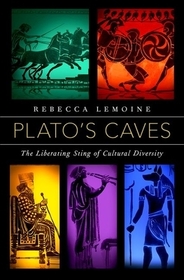
Plato's Caves
The Liberating Sting of Cultural Diversity
-
10% KEDVEZMÉNY?
- A kedvezmény csak az 'Értesítés a kedvenc témákról' hírlevelünk címzettjeinek rendeléseire érvényes.
- Kiadói listaár GBP 90.00
-
42 997 Ft (40 950 Ft + 5% áfa)
Az ár azért becsült, mert a rendelés pillanatában nem lehet pontosan tudni, hogy a beérkezéskor milyen lesz a forint árfolyama az adott termék eredeti devizájához képest. Ha a forint romlana, kissé többet, ha javulna, kissé kevesebbet kell majd fizetnie.
- Kedvezmény(ek) 10% (cc. 4 300 Ft off)
- Kedvezményes ár 38 698 Ft (36 855 Ft + 5% áfa)
Iratkozzon fel most és részesüljön kedvezőbb árainkból!
Feliratkozom
42 997 Ft

Beszerezhetőség
Becsült beszerzési idő: A Prosperónál jelenleg nincsen raktáron, de a kiadónál igen. Beszerzés kb. 3-5 hét..
A Prosperónál jelenleg nincsen raktáron.
Why don't you give exact delivery time?
A beszerzés időigényét az eddigi tapasztalatokra alapozva adjuk meg. Azért becsült, mert a terméket külföldről hozzuk be, így a kiadó kiszolgálásának pillanatnyi gyorsaságától is függ. A megadottnál gyorsabb és lassabb szállítás is elképzelhető, de mindent megteszünk, hogy Ön a lehető leghamarabb jusson hozzá a termékhez.
A termék adatai:
- Kiadó OUP USA
- Megjelenés dátuma 2020. február 20.
- ISBN 9780190936983
- Kötéstípus Keménykötés
- Terjedelem288 oldal
- Méret 163x236x25 mm
- Súly 567 g
- Nyelv angol 0
Kategóriák
Rövid leírás:
From student protests over the teaching of canonical texts such as Plato's Republic to the use of images of classical Greek statues in white supremacist propaganda, the world of the ancient Greeks is deeply implicated in a heated contemporary debate about identity and diversity. In Plato's Caves, Rebecca LeMoine defends the bold thesis that Plato was a friend of cultural diversity, contrary to many contemporary perceptions. Through close readings of four Platonic dialogues--Republic, Menexenus, Laws, and Phaedrus--LeMoine shows that, across Plato's dialogues, foreigners play a role similar to that of Socrates: liberating citizens from intellectual bondage.
TöbbHosszú leírás:
Months before the 2016 United States presidential election, universities across the country began reporting the appearance of white nationalist flyers featuring slogans like "Let's Become Great Again" and "Protect Your Heritage" against the backdrop of white marble statues depicting figures such as Apollo and Hercules. Groups like Identity Evropa (which sponsored the flyers) oppose cultural diversity and quote classical thinkers such as Plato in support of their anti-immigration views. The traditional scholarly narrative of cultural diversity in classical Greek political thought often reinforces the perception of ancient thinkers as xenophobic, and this is particularly the case with interpretations of Plato. While scholars who study Plato reject the wholesale dismissal of his work, the vast majority tend to admit that his portrayal of foreigners is unsettling. From student protests over the teaching of canonical texts such as Plato's Republic to the use of images of classical Greek statues in white supremacist propaganda, the world of the ancient Greeks is deeply implicated in a heated contemporary debate about identity and diversity.
In Plato's Caves, Rebecca LeMoine defends the bold thesis that Plato was a friend of cultural diversity, contrary to many contemporary perceptions. LeMoine shows that, across Plato's dialogues, foreigners play a role similar to that of Socrates: liberating citizens from intellectual bondage. Through close readings of four Platonic dialogues--Republic, Menexenus, Laws, and Phaedrus--LeMoine recovers Plato's unique insight into the promise, and risk, of cross-cultural engagement. Like the Socratic "gadfly" who stings the "horse" of Athens into wakefulness, foreigners can provoke citizens to self-reflection by exposing contradictions and confronting them with alternative ways of life. The painfulness of this experience explains why encounters with foreigners often give rise to tension and conflict. Yet, it also reveals why cultural diversity is an essential good. Simply put, exposure to cultural diversity helps us develop the intellectual humility we need to be good citizens and global neighbors. By illuminating Plato's epistemological argument for cultural diversity, Plato's Caves challenges readers to examine themselves and to reinvigorate their love of learning.
Plato's Caves offers us a remarkably coherent and compelling vision of what a Platonic theory of cultural diversity would entail. We might think of LeMoine's book as doing the provocative work of the gadfly celebrated in its pages, prompting us to remember that there is still much in the thought of this seemingly familiar philosopher that remains to be better understood.
Tartalomjegyzék:
Acknowledgments
1. Introduction
2. Setting the Stage: A World of Caves
Part I: Athenians and foreigners
3. The Panharmonic Music of the Piraeus: Diversity, Democracy, and Philosophy in the Republic
4. Civic Myths through Immigrant Voices: Aspasia as Gadfly in the Menexenus
Part II: Athenians as foreigners
5. An Athenian in Crete: Moderating the Song of the Armed Camp in the Laws
6. Socrates the Foreigner? Self-Examination and Civic Identity in the Phaedrus
7. Conclusion
Notes
Bibliography
Index

