

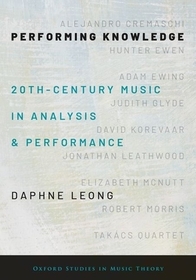
Performing Knowledge
Twentieth-Century Music in Analysis and Performance
Sorozatcím: Oxford Studies in Music Theory;
-
10% KEDVEZMÉNY?
- A kedvezmény csak az 'Értesítés a kedvenc témákról' hírlevelünk címzettjeinek rendeléseire érvényes.
- Kiadói listaár GBP 79.00
-
37 742 Ft (35 945 Ft + 5% áfa)
Az ár azért becsült, mert a rendelés pillanatában nem lehet pontosan tudni, hogy a beérkezéskor milyen lesz a forint árfolyama az adott termék eredeti devizájához képest. Ha a forint romlana, kissé többet, ha javulna, kissé kevesebbet kell majd fizetnie.
- Kedvezmény(ek) 10% (cc. 3 774 Ft off)
- Kedvezményes ár 33 968 Ft (32 351 Ft + 5% áfa)
Iratkozzon fel most és részesüljön kedvezőbb árainkból!
Feliratkozom
37 742 Ft

Beszerezhetőség
Megrendelésre a kiadó utánnyomja a könyvet. Rendelhető, de a szokásosnál kicsit lassabban érkezik meg.
Why don't you give exact delivery time?
A beszerzés időigényét az eddigi tapasztalatokra alapozva adjuk meg. Azért becsült, mert a terméket külföldről hozzuk be, így a kiadó kiszolgálásának pillanatnyi gyorsaságától is függ. A megadottnál gyorsabb és lassabb szállítás is elképzelhető, de mindent megteszünk, hogy Ön a lehető leghamarabb jusson hozzá a termékhez.
A termék adatai:
- Kiadó OUP USA
- Megjelenés dátuma 2020. január 15.
- ISBN 9780190653545
- Kötéstípus Keménykötés
- Terjedelem432 oldal
- Méret 185x257x38 mm
- Súly 975 g
- Nyelv angol
- Illusztrációk 150 illus. 29
Kategóriák
Rövid leírás:
Performing Knowledge explores the relationship between musical performance and analysis through a unique collaboration between a music theorist and a cast of internationally renowned performers, investigating major musical works of the twentieth century--Ravel, Schoenberg, Bartók, Schnittke, Milhaud, Messiaen, Babbitt, Carter, and Morris. The book is a brave crossing of disciplinary divides between scholarship and practice, a theory text enlivened by the voices of performers who create, interpret, and articulate structure.
TöbbHosszú leírás:
How do musical analysis and performance relate? In a unique collaborative approach to this question, theorist-pianist Daphne Leong partners with internationally renowned performers to interpret twentieth-century repertoire. Imaginative explorations of music by Ravel, Schoenberg, Bartók, Schnittke, Milhaud, Messiaen, Babbitt, Carter, and Morris illuminate focal issues such as the role of embodiment, the affordances of a score, the cultural understanding of notation, the use of metaphor, and - to round out the viewpoints of theorist and performers with those of composer and listeners - the role of structure in audience reception.
Each exploration engages deeply with musical structure, redefined to encompass the creative activity of composers, performers, analysts, and listeners. Performances, demonstrations, and interviews online complement the book's written text; practical application and pedagogical guidance round out theoretical and analytical content.
The collaborations themselves demonstrate different dimensions of knowledge at the intersection of analysis and performance, and illustrate Leong's theory of the things and people that facilitate cross-disciplinary collaboration in music. They also exemplify the antagonisms and synergies that emerge when theorists and performers meet. Both flexibly and rigorously conceived, Performing Knowledge is a brave crossing of disciplinary divides between scholarship and practice, a work of analysis shaped by the voices of performers.
Leong's identity as a shared agent, and her longtime engagement with performance and analysis, shine through in Performing Knowledge. Three concepts [shared items, shared objectives, shared agents] provide an insightful new way of considering performance and analysis. The website includes a trove of resources ... Although this volume was not clearly intended as a textbook, it would be an interesting pedagogical experiment to use this book as a text over the course of a semester, examining the twentieth-century musical works within and the teamwork that led to their chapters, while fostering collaborative relationships between duos and small groups of students, leading to similar shared objects (essays, audio and video recordings) as final projects.
Tartalomjegyzék:
Acknowledgments
Permissions
Note to Readers
About the Companion Website
Contributors
Theme: Performers, Structure, and Ways of Knowing
Counterpoint: Cross-Disciplinary Collaboration
Variations
Performance & Analysis
1. Determination of Structure: Performers' Voices on Ravel's Concerto pour la main gauche
2. Creation of Structure: Interpreting Schoenberg's Klavierstück Op. 19 No. 4
3. Understanding of Structure: Performed Rhythm at the Center of Bartók's Fifth String Quartet
Analysis & Performance
4. Story in Structure: Schnittke's Piano Quartet and "the attempt to remember"
5. Poetry in Structure: Counterpointing Motion in Milhaud's "Aurore"
6. Drama in Structure: Enacting Ritual and Drama: The Two Pianos of Messiaen's Visions de l'Amen
Performance & Analysis
7. Script Versus Structure: Virtuosity in Babbitt's Lonely Flute, with Reflections on Process
8. Performing With Structure: Local Frictions and Long-Range Connections in Carter's Changes for Guitar
9. Reception and Structure: Morris's Clear Sounds, Audiences, and New Music
Counterpoint: Cross-Disciplinary Collaboration
Theme: Performers, Structure, and Ways of Knowing
Bibliography
Index

