

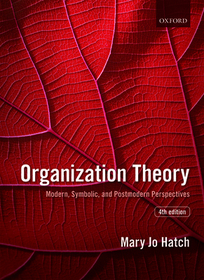
Organization Theory
Modern, Symbolic, and Postmodern Perspectives
-
10% KEDVEZMÉNY?
- A kedvezmény csak az 'Értesítés a kedvenc témákról' hírlevelünk címzettjeinek rendeléseire érvényes.
- Kiadói listaár GBP 74.99
-
33 857 Ft (32 245 Ft + 5% áfa)
Az ár azért becsült, mert a rendelés pillanatában nem lehet pontosan tudni, hogy a beérkezéskor milyen lesz a forint árfolyama az adott termék eredeti devizájához képest. Ha a forint romlana, kissé többet, ha javulna, kissé kevesebbet kell majd fizetnie.
- Kedvezmény(ek) 10% (kb. 3 385 Ft)
- Kedvezményes ár 30 472 Ft (29 021 Ft + 5% áfa)
Iratkozzon fel most és részesüljön kedvezőbb árainkból!
Feliratkozom
33 857 Ft

Beszerezhetőség
Megrendelésre a kiadó utánnyomja a könyvet. Rendelhető, de a szokásosnál kicsit lassabban érkezik meg.
Why don't you give exact delivery time?
A beszerzés időigényét az eddigi tapasztalatokra alapozva adjuk meg. Azért becsült, mert a terméket külföldről hozzuk be, így a kiadó kiszolgálásának pillanatnyi gyorsaságától is függ. A megadottnál gyorsabb és lassabb szállítás is elképzelhető, de mindent megteszünk, hogy Ön a lehető leghamarabb jusson hozzá a termékhez.
A termék adatai:
- Kiadás sorszáma 4
- Kiadó OUP Oxford
- Megjelenés dátuma 2018. március 15.
- ISBN 9780198723981
- Kötéstípus Puhakötés
- Terjedelem436 oldal
- Méret 247x189x21 mm
- Súly 744 g
- Nyelv angol 0
Kategóriák
Rövid leírás:
The only textbook to use a three-perspective framework to explain, explore, and evaluate organizational theory in a distinctively engaging style.
TöbbHosszú leírás:
Organization Theory offers a clear and comprehensive introduction to the study of organizations and organizing processes. Through the unique three-perspective approach, students are challenged to explain, explore, and evaluate organizational theory, drawing on their own experiences as well as the book's diverse practical examples.
The fourth edition includes a host of new learning features, which examine the practicality of theorizing and encourage students to broaden their intellectual reach. 'Theory to Practice' boxes and case studies highlight organizing processes in a range of settings, either through real-life, business examples or through exercises that encourage students to apply the theory to organizations they know or organizing experiences of their own. 'Think like a Theorist' and 'Exercise Those Perspectives' boxes then encourage students to actively theorize and evaluate, developing essential critical thinking skills and a greater understanding of the complex knowledge with which organization theorists grapple. By taking theory off the page, students can learn through doing and adopt a reflexive stance to the world around them.
Mary Jo Hatch draws on her extensive experience in the field to produce a trusted and accessible introduction to the subject that provides academic depth, engaging pedagogy, and a practical focus.
This book is accompanied by a collection of online resources:
For students:
Multiple-choice questions
For lecturers:
PowerPoint slides
Figures and tables from the book
Lecturers' guide
Additional case studies
The most useful introductory text on organization theory there is.
Tartalomjegyzék:
Part One: What is Organization Theory?
Organization theory and its multiple perspectives
A brief history of organization theory
Part Two: Core Concepts and Theories
Organization-environment relations
Organizational social structure
Organizational technology
Organizational culture
The physical structure of built space in organizations
Part Three: Themes and Applications
Power in and around organizations: Organizational politics, conflict, and control
Organizational identity at Carlsberg Group

