

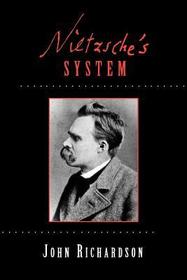
Nietzsche's System
-
10% KEDVEZMÉNY?
- A kedvezmény csak az 'Értesítés a kedvenc témákról' hírlevelünk címzettjeinek rendeléseire érvényes.
- Kiadói listaár GBP 49.99
-
22 570 Ft (21 495 Ft + 5% áfa)
Az ár azért becsült, mert a rendelés pillanatában nem lehet pontosan tudni, hogy a beérkezéskor milyen lesz a forint árfolyama az adott termék eredeti devizájához képest. Ha a forint romlana, kissé többet, ha javulna, kissé kevesebbet kell majd fizetnie.
- Kedvezmény(ek) 10% (kb. 2 257 Ft)
- Kedvezményes ár 20 313 Ft (19 346 Ft + 5% áfa)
Iratkozzon fel most és részesüljön kedvezőbb árainkból!
Feliratkozom
22 570 Ft

Beszerezhetőség
Megrendelésre a kiadó utánnyomja a könyvet. Rendelhető, de a szokásosnál kicsit lassabban érkezik meg.
Why don't you give exact delivery time?
A beszerzés időigényét az eddigi tapasztalatokra alapozva adjuk meg. Azért becsült, mert a terméket külföldről hozzuk be, így a kiadó kiszolgálásának pillanatnyi gyorsaságától is függ. A megadottnál gyorsabb és lassabb szállítás is elképzelhető, de mindent megteszünk, hogy Ön a lehető leghamarabb jusson hozzá a termékhez.
A termék adatai:
- Kiadó OUP USA
- Megjelenés dátuma 2002. június 20.
- ISBN 9780195155952
- Kötéstípus Puhakötés
- Terjedelem328 oldal
- Méret 233x161x22 mm
- Súly 467 g
- Nyelv angol 0
Kategóriák
Rövid leírás:
In recent years critics have embraced Nietzsche as a philosopher who broke free from the traditions of Western philosophy, even to the point of rejecting the goal of truth. Richardson's original book challenges these interpretations with a "conservative" reading of Nietzsche which points, instead, to the many continuities in his work to those very philosophical traditions. Demonstrating the larger structure and metaphysical unity in Nietzsche's strikingly diverse views, Richardson offers a genuinely radical interpretation of the controversial thinker.
TöbbHosszú leírás:
This book argues, against recent interpretations, that Nietzsche does in fact have a metaphysical system--but that this is to his credit. Rather than renouncing philosophy's traditional project, he still aspires to find and state essential truths, both descriptive and valuative, about us and the world. These basic thoughts organize and inform everything he writes; by examining them closely we can find the larger structure and unifying sense of his strikingly diverse views. With rigor and conceptual specificity, Richardson examines the will-to-power ontology and maps the values that emerge from it. He also considers the significance of Nietzsche's famous break with Plato--replacing the concept of "being" with that of "becoming." By its conservative method, this book tries to do better justice to the truly radical force of Nietzsche's ideas--to demonstrate more exactly their novelty and interest.
"...the detail with which Richardson systematically connects will to power as an ontology with other prominent Nietzschean ideas is impressive."--The Review of Metaphysics

