

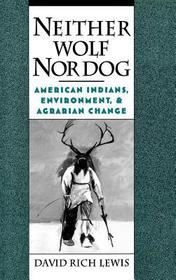
Neither Wolf Nor Dog
American Indians, Environment, and Agrarian Change
-
10% KEDVEZMÉNY?
- A kedvezmény csak az 'Értesítés a kedvenc témákról' hírlevelünk címzettjeinek rendeléseire érvényes.
- Kiadói listaár GBP 33.49
-
15 999 Ft (15 237 Ft + 5% áfa)
Az ár azért becsült, mert a rendelés pillanatában nem lehet pontosan tudni, hogy a beérkezéskor milyen lesz a forint árfolyama az adott termék eredeti devizájához képest. Ha a forint romlana, kissé többet, ha javulna, kissé kevesebbet kell majd fizetnie.
- Kedvezmény(ek) 10% (cc. 1 600 Ft off)
- Kedvezményes ár 14 399 Ft (13 713 Ft + 5% áfa)
Iratkozzon fel most és részesüljön kedvezőbb árainkból!
Feliratkozom
15 999 Ft

Beszerezhetőség
Megrendelésre a kiadó utánnyomja a könyvet. Rendelhető, de a szokásosnál kicsit lassabban érkezik meg.
Why don't you give exact delivery time?
A beszerzés időigényét az eddigi tapasztalatokra alapozva adjuk meg. Azért becsült, mert a terméket külföldről hozzuk be, így a kiadó kiszolgálásának pillanatnyi gyorsaságától is függ. A megadottnál gyorsabb és lassabb szállítás is elképzelhető, de mindent megteszünk, hogy Ön a lehető leghamarabb jusson hozzá a termékhez.
A termék adatai:
- Kiadó OUP USA
- Megjelenés dátuma 1995. január 12.
- ISBN 9780195062977
- Kötéstípus Keménykötés
- Terjedelem256 oldal
- Méret 237x161x20 mm
- Súly 544 g
- Nyelv angol
- Illusztrációk halftones, line drawings 0
Kategóriák
Rövid leírás:
The book focuses on three diverse Native American groups, the Northern Ute, Hupa, and Papago - and in particular explores the ways in which these peoples responded to social, subsistence, and environmental changes entailed by settled reservations and allotted agriculture, and how this helps to reveal how American Indians in general responded to these cultural changes. Lewis tells the story not of a past civilization, but one that has adapted and evolved and continues to do so this day.
TöbbHosszú leírás:
During the nineteenth century, Americans looked to the eventual civilization and assimilation of Native Americans through a process of removal, reservation, and directed culture change. Policies for directed subsistence change and incorporation had far-reaching social and environmental consequences for native peoples and native lands. This study explores the experiences of three groups--Northern Utes, Hupas, and Tohono O'odhams--with settled reservation and allotted agriculture in the nineteenth and twentieth centuries. Each group inhabited a different environment, and their cultural traditions reflected distinct subsistence adaptations to life in the western United States. Each experienced the full weight of federal agrarian policy yet responded differently, in culturally consistent ways, to subsistence change and the resulting social and environmental consequences. Attempts to establish successful agricultural economies ultimately failed as each group reproduced their own cultural values in a diminished and rapidly changing environment. In the end, such policies and agrarian experiences left Indian farmers marginally incorporated and economically dependent.
Lewis is dealing with the more complex and academically challenging aftermath of conquest...This is precisely this finely nuanced and sensitive book's strength and appeal.

