

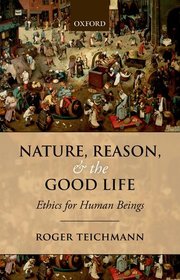
Nature, Reason, and the Good Life
Ethics for Human Beings
-
10% KEDVEZMÉNY?
- A kedvezmény csak az 'Értesítés a kedvenc témákról' hírlevelünk címzettjeinek rendeléseire érvényes.
- Kiadói listaár GBP 30.49
-
14 566 Ft (13 872 Ft + 5% áfa)
Az ár azért becsült, mert a rendelés pillanatában nem lehet pontosan tudni, hogy a beérkezéskor milyen lesz a forint árfolyama az adott termék eredeti devizájához képest. Ha a forint romlana, kissé többet, ha javulna, kissé kevesebbet kell majd fizetnie.
- Kedvezmény(ek) 10% (cc. 1 457 Ft off)
- Kedvezményes ár 13 109 Ft (12 485 Ft + 5% áfa)
Iratkozzon fel most és részesüljön kedvezőbb árainkból!
Feliratkozom
14 566 Ft

Beszerezhetőség
Megrendelésre a kiadó utánnyomja a könyvet. Rendelhető, de a szokásosnál kicsit lassabban érkezik meg.
Why don't you give exact delivery time?
A beszerzés időigényét az eddigi tapasztalatokra alapozva adjuk meg. Azért becsült, mert a terméket külföldről hozzuk be, így a kiadó kiszolgálásának pillanatnyi gyorsaságától is függ. A megadottnál gyorsabb és lassabb szállítás is elképzelhető, de mindent megteszünk, hogy Ön a lehető leghamarabb jusson hozzá a termékhez.
A termék adatai:
- Kiadó OUP Oxford
- Megjelenés dátuma 2014. október 2.
- ISBN 9780198708971
- Kötéstípus Puhakötés
- Terjedelem210 oldal
- Méret 215x142x11 mm
- Súly 236 g
- Nyelv angol 0
Kategóriák
Rövid leírás:
At the centre of our ethical thought stands the human being. Roger Teichmann examines the ways in which facts about human nature determine the shape of ethical concepts such as rationality, virtue, and happiness. He argues that only by attending to the social and empirical character of language use can we address a number of problems in ethics.
TöbbHosszú leírás:
At the centre of our ethical thought stands the human being. Facts about human nature determine the shape of ethical concepts in a variety of ways, and our pre-rational animal nature forms the basis of notions to do with rationality, virtue, and happiness, among other things. Nature, Reason, and the Good Life examines these themes while also arguing for the critical importance of language: only by attending to the social and empirical character of actual language use can we make headway with a number of problems in ethics. Thus what counts as a good or bad reason for action depends on the purposes of human enquiry, as embodied in the question 'Why?'--it does not depend, for example, on some abstract and higher Rationality connected with 'the point of the cosmos'. Furthermore, considerations in philosophy of language and in philosophy of mind together show how emotions, desires, and pleasure--all crucial for ethics--turn out not to be inner states carrying a sort of subjective authority, above or below criticism or justification, and this fact helps undermine various forms of subjectivism and individualism to be found both in philosophy and in the wider culture. Starting from an examination of foundational issues, the book covers a range of topics, including animals, agency, enjoyment, the good life, contemplation, death, and the importance of philosophy. En route, there are critiques of a number of prevalent trends of thought, such as utilitarianism, anti-speciesism, relativism, scientism and even 'ism'-ism.
This is a rich, interesting, and engaging work. It is well-written, forthright, helpfully signposted, always letting readers know what the argument is and what the reasons are for it.
Tartalomjegyzék:
Introduction
Reasons and Reactions
Human Agency
Pleasure and Pain
The Good Life
Philosophy
References
Index

