

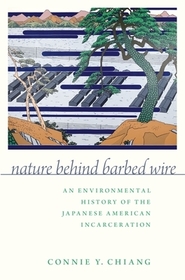
Nature Behind Barbed Wire
An Environmental History of the Japanese American Incarceration
-
10% KEDVEZMÉNY?
- A kedvezmény csak az 'Értesítés a kedvenc témákról' hírlevelünk címzettjeinek rendeléseire érvényes.
- Kiadói listaár GBP 27.49
-
13 133 Ft (12 507 Ft + 5% áfa)
Az ár azért becsült, mert a rendelés pillanatában nem lehet pontosan tudni, hogy a beérkezéskor milyen lesz a forint árfolyama az adott termék eredeti devizájához képest. Ha a forint romlana, kissé többet, ha javulna, kissé kevesebbet kell majd fizetnie.
- Kedvezmény(ek) 10% (cc. 1 313 Ft off)
- Kedvezményes ár 11 819 Ft (11 256 Ft + 5% áfa)
Iratkozzon fel most és részesüljön kedvezőbb árainkból!
Feliratkozom
13 133 Ft

Beszerezhetőség
Becsült beszerzési idő: A Prosperónál jelenleg nincsen raktáron, de a kiadónál igen. Beszerzés kb. 3-5 hét..
A Prosperónál jelenleg nincsen raktáron.
Why don't you give exact delivery time?
A beszerzés időigényét az eddigi tapasztalatokra alapozva adjuk meg. Azért becsült, mert a terméket külföldről hozzuk be, így a kiadó kiszolgálásának pillanatnyi gyorsaságától is függ. A megadottnál gyorsabb és lassabb szállítás is elképzelhető, de mindent megteszünk, hogy Ön a lehető leghamarabb jusson hozzá a termékhez.
A termék adatai:
- Kiadó OUP USA
- Megjelenés dátuma 2020. szeptember 22.
- ISBN 9780197533567
- Kötéstípus Puhakötés
- Terjedelem330 oldal
- Méret 234x157x17 mm
- Súly 476 g
- Nyelv angol
- Illusztrációk 34 halftones 56
Kategóriák
Rövid leírás:
Nature Behind Barbed Wire uses an environmental lens to reinterpret the forced removal and confinement of Japanese Americans during World War II.
TöbbHosszú leírás:
The mass imprisonment of over 110,000 people of Japanese ancestry during World War II was one of the most egregious violations of civil liberties in United States history. Removed from their homes on the temperate Pacific Coast, Japanese Americans spent the war years in desolate camps in the nation's interior. Photographers including Ansel Adams and Dorothea Lange visually captured these camps in images that depicted the environment as a source of both hope and hardship. And yet the literature on incarceration has most often focused on the legal and citizenship statuses of the incarcerees, their political struggles with the US government, and their oral testimony.
Nature Behind Barbed Wire shifts the focus to the environment. It explores how the landscape shaped the experiences of both Japanese Americans and federal officials who worked for the War Relocation Authority (WRA), the civilian agency that administered the camps. The complexities of the natural world both enhanced and constrained the WRA's power and provided Japanese Americans with opportunities to redefine the terms and conditions of their confinement. Even as the environment compounded their feelings of despair and outrage, the incarcerees also found that their agency in transforming and adapting to the natural world could help them survive and contest their incarceration. Japanese Americans and WRA officials negotiated the terms of confinement with each other and with a dynamic natural world.
Ultimately, as Connie Chiang demonstrates, the Japanese American incarceration was fundamentally an environmental story.
A superb explication of the power of place.... Chiang argues the confinement of 120,000 internees is an environmental story as much as a social, legal, or political one.... Nature behind Barbed Wire is vital scholarship because it places the incarceration of Japanese Americans in the arena of social geography and environmental history.
Tartalomjegyzék:
Acknowledgments
Note on Terminology
Introduction: The Nature of Confinement
Chapter 1: Removal and Displacement
Chapter 2: Choosing Sites, Building Camps
Chapter 3: Maintaining the Camps
Chapter 4: Desert Agriculture
Chapter 5: Environmental Patriotism
Chapter 6: Outdoor Recreation
Chapter 7: Dispersal, Resettlement, Return
Epilogue: Emanating from the Soil
Notes
Selected Bibliography
Index

