

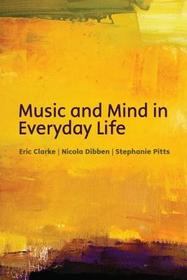
Music and mind in everyday life
-
10% KEDVEZMÉNY?
- A kedvezmény csak az 'Értesítés a kedvenc témákról' hírlevelünk címzettjeinek rendeléseire érvényes.
- Kiadói listaár GBP 52.00
-
23 478 Ft (22 360 Ft + 5% áfa)
Az ár azért becsült, mert a rendelés pillanatában nem lehet pontosan tudni, hogy a beérkezéskor milyen lesz a forint árfolyama az adott termék eredeti devizájához képest. Ha a forint romlana, kissé többet, ha javulna, kissé kevesebbet kell majd fizetnie.
- Kedvezmény(ek) 10% (cc. 2 348 Ft off)
- Kedvezményes ár 21 130 Ft (20 124 Ft + 5% áfa)
Iratkozzon fel most és részesüljön kedvezőbb árainkból!
Feliratkozom
23 478 Ft

Beszerezhetőség
Megrendelésre a kiadó utánnyomja a könyvet. Rendelhető, de a szokásosnál kicsit lassabban érkezik meg.
Why don't you give exact delivery time?
A beszerzés időigényét az eddigi tapasztalatokra alapozva adjuk meg. Azért becsült, mert a terméket külföldről hozzuk be, így a kiadó kiszolgálásának pillanatnyi gyorsaságától is függ. A megadottnál gyorsabb és lassabb szállítás is elképzelhető, de mindent megteszünk, hogy Ön a lehető leghamarabb jusson hozzá a termékhez.
A termék adatai:
- Kiadó OUP Oxford
- Megjelenés dátuma 2009. október 22.
- ISBN 9780198525578
- Kötéstípus Puhakötés
- Terjedelem224 oldal
- Méret 232x155x12 mm
- Súly 347 g
- Nyelv angol 0
Kategóriák
Rövid leírás:
What makes people want to live their lives to the sound of music? Why do so many of our most private experiences and most public spectacles incorporate - or depend on - music? This book examines musical behaviour and experience in a range of circumstances, including composing and performing, listening and persuading, and teaching and learning.
TöbbHosszú leírás:
Music pervades everyday life - in homes, on trains and planes, in cars and shops, at births and deaths, at weddings and war, in concert halls, clubs, stadiums, and fields. In so many ways, music marks and orchestrates the ways in which people experience the world together. What is it that makes people want to live their lives to the sound of music, and why do so many of our most private experiences and most public spectacles incorporate - or even depend on - music?
'Music and Mind in Everyday Life' uses psychology to understand musical behaviour and experience in a range of circumstances, including composing and performing, listening and persuading, and teaching and learning. Starting from 'real world' examples of musical experiences, it critically examines the ways in which psychology can explain people's diverse experience of, and engagement with music, focusing on how music is used, acquired, and made in a range of familiar musical contexts. Using a framework of real and imagined musical scenarios, the book draws on a wide range of research in the psychology of music and music education.
The book is organized into three central sections. In Making Music it tackles the psychology of playing, improvising, and composing music, understood as closely related and integrated activities. In Using Music the authors address the ways in which people listen to music, manage their emotions, moods, and identities with music, and use music for therapy, persuasion and social control. In Acquiring Music they consider music in human development, and in a range of more formal and informal educational contexts. The final chapter provides an overview of the history and preoccupations of music psychology as a discipline, and concludes with some remarks on the wider significance of music psychology for an understanding of human subjectivity.
Drawing on a wide range of research in music psychology and music education, the book will make fascinating reading for musicians and music scholars, as well as those in the fields of music psychology and music education.
It covers considerable ground most elegantly and picks out key topics as sites of debate and future research this book will be invaluable to scholars working across a number of disciplines.
Tartalomjegyzék:
Music in people's lives
Making Music
Motivations and skills
Expression and communication in performance
Improvising and composing
Using Music
Hearing and listening
Individuals using music
Groups using music
Acquiring Music
Lifelong musical development
Contexts for learning
The psychology of music - an overview

