

-
10% KEDVEZMÉNY?
- A kedvezmény csak az 'Értesítés a kedvenc témákról' hírlevelünk címzettjeinek rendeléseire érvényes.
- Kiadói listaár GBP 115.00
-
51 922 Ft (49 450 Ft + 5% áfa)
Az ár azért becsült, mert a rendelés pillanatában nem lehet pontosan tudni, hogy a beérkezéskor milyen lesz a forint árfolyama az adott termék eredeti devizájához képest. Ha a forint romlana, kissé többet, ha javulna, kissé kevesebbet kell majd fizetnie.
- Kedvezmény(ek) 10% (cc. 5 192 Ft off)
- Kedvezményes ár 46 730 Ft (44 505 Ft + 5% áfa)
Iratkozzon fel most és részesüljön kedvezőbb árainkból!
Feliratkozom
51 922 Ft

Beszerezhetőség
Megrendelésre a kiadó utánnyomja a könyvet. Rendelhető, de a szokásosnál kicsit lassabban érkezik meg.
Why don't you give exact delivery time?
A beszerzés időigényét az eddigi tapasztalatokra alapozva adjuk meg. Azért becsült, mert a terméket külföldről hozzuk be, így a kiadó kiszolgálásának pillanatnyi gyorsaságától is függ. A megadottnál gyorsabb és lassabb szállítás is elképzelhető, de mindent megteszünk, hogy Ön a lehető leghamarabb jusson hozzá a termékhez.
A termék adatai:
- Kiadó OUP USA
- Megjelenés dátuma 2019. augusztus 12.
- ISBN 9780190916428
- Kötéstípus Keménykötés
- Terjedelem266 oldal
- Méret 160x236x17 mm
- Súly 528 g
- Nyelv angol 0
Kategóriák
Rövid leírás:
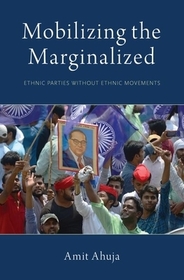
In Mobilizing the Marginalized, Amit Ahuja shows how social movements by marginalized ethnic groups - those who are stigmatized by others and disproportionately poor - undermine bloc voting to generate competition for marginalized citizens' votes across political parties.
TöbbHosszú leírás:
India's over 200 million Dalits, once called "untouchables," have been mobilized by social movements and political parties, but the outcomes of this mobilization are puzzling. Dalits' ethnic parties have performed poorly in elections in states where movements demanding social equality have been strong while they have succeeded in states where such movements have been entirely absent or weak. In Mobilizing the Marginalized, Amit Ahuja demonstrates that the collective action of marginalized groups--those that are historically stigmatized and disproportionately poor — is distinct. Drawing on extensive original research conducted across four of India's largest states, he shows, for the marginalized, social mobilization undermines the bloc voting their ethnic parties' rely on for electoral triumph and increases multi-ethnic political parties' competition for marginalized votes. He presents evidence showing that a marginalized group gains more from participating in a social movement and dividing support among parties than from voting as a bloc for an ethnic party.
Armed with substantial research and possessing intellectual energy to challenge conventional wisdom, Amit Ahuja provides a convincing counterpoint to fallacious understandings of the layered relationship between self-assertion movements and ethnic electoral mobilization.
Tartalomjegyzék:
List of Figures, Maps, and Tables
Preface
Acknowledgments
List of Abbreviations
1 Introduction
2 Mobilization and the Marginalized
3 Historical Dalit Social Mobilization
4 The Effects of Historical Dalit Social Mobilization
5 Dalit Party Performance and Bloc Voting
6 Dalit Social Mobilization and Bloc Voting
7 How Mobilization Type Shapes Dalit Welfare
8 The Identity Trap
9 Conclusion: Whither Dalit Politics?
Appendix A Focus Groups and Follow-up Interviews
Appendix B Locality-based Campaign Survey
Appendix C An Observational Study Assessing Caste Boundaries in the Indian
Marriage Market
Glossary
Index

