

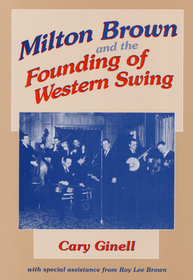
Milton Brown and the Founding of Western Swing
Sorozatcím: Music in American Life; 561;
-
10% KEDVEZMÉNY?
- A kedvezmény csak az 'Értesítés a kedvenc témákról' hírlevelünk címzettjeinek rendeléseire érvényes.
- Kiadói listaár GBP 28.99
-
13 849 Ft (13 190 Ft + 5% áfa)
Az ár azért becsült, mert a rendelés pillanatában nem lehet pontosan tudni, hogy a beérkezéskor milyen lesz a forint árfolyama az adott termék eredeti devizájához képest. Ha a forint romlana, kissé többet, ha javulna, kissé kevesebbet kell majd fizetnie.
- Kedvezmény(ek) 10% (cc. 1 385 Ft off)
- Kedvezményes ár 12 465 Ft (11 871 Ft + 5% áfa)
Iratkozzon fel most és részesüljön kedvezőbb árainkból!
Feliratkozom
13 849 Ft

Beszerezhetőség
Becsült beszerzési idő: A Prosperónál jelenleg nincsen raktáron, de a kiadónál igen. Beszerzés kb. 3-5 hét..
A Prosperónál jelenleg nincsen raktáron.
Why don't you give exact delivery time?
A beszerzés időigényét az eddigi tapasztalatokra alapozva adjuk meg. Azért becsült, mert a terméket külföldről hozzuk be, így a kiadó kiszolgálásának pillanatnyi gyorsaságától is függ. A megadottnál gyorsabb és lassabb szállítás is elképzelhető, de mindent megteszünk, hogy Ön a lehető leghamarabb jusson hozzá a termékhez.
A termék adatai:
- Kiadó University of Illinois Press
- Megjelenés dátuma 1994. szeptember 1.
- Kötetek száma Hardback
- ISBN 9780252020414
- Kötéstípus Keménykötés
- Terjedelem374 oldal
- Méret 229x152x28 mm
- Súly 680 g
- Nyelv angol 0
Kategóriák
Hosszú leírás:
A few weeks before his death in an auto accident, Milton Brown and his band the Musical Brownies recorded forty-nine songs in a single three-day session. That prolific output was a testament to Brown's enormous popularity not only on record but as head of the premier touring act in the Southwest. Cary Ginell draws on interviews and his own musical knowledge to chart Brown's too-short career. Ginell sees Brown as the first key figure to merge blues, jazz, and country into the genre that artists like Bob Wills and Spade Cooley later popularized as Western Swing. Following Brown from his early years to his rise via the Fort Worth dance hall scene, Ginell traces the evolution of the singer-bandleader's musical innovations like adding vocals to dance music and his band's adoption of a style heavy with rhythm and blues. In 1936, Brown and his band stood at the brink of national stardom when Brown's car hit a telephone pole. He died five days later.
Több
