

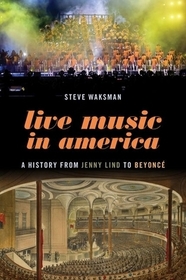
Live Music in America
A History from Jenny Lind to Beyoncé
-
10% KEDVEZMÉNY?
- A kedvezmény csak az 'Értesítés a kedvenc témákról' hírlevelünk címzettjeinek rendeléseire érvényes.
- Kiadói listaár GBP 157.50
-
71 111 Ft (67 725 Ft + 5% áfa)
Az ár azért becsült, mert a rendelés pillanatában nem lehet pontosan tudni, hogy a beérkezéskor milyen lesz a forint árfolyama az adott termék eredeti devizájához képest. Ha a forint romlana, kissé többet, ha javulna, kissé kevesebbet kell majd fizetnie.
- Kedvezmény(ek) 10% (cc. 7 111 Ft off)
- Kedvezményes ár 64 000 Ft (60 953 Ft + 5% áfa)
Iratkozzon fel most és részesüljön kedvezőbb árainkból!
Feliratkozom
71 111 Ft

Beszerezhetőség
Megrendelésre a kiadó utánnyomja a könyvet. Rendelhető, de a szokásosnál kicsit lassabban érkezik meg.
Why don't you give exact delivery time?
A beszerzés időigényét az eddigi tapasztalatokra alapozva adjuk meg. Azért becsült, mert a terméket külföldről hozzuk be, így a kiadó kiszolgálásának pillanatnyi gyorsaságától is függ. A megadottnál gyorsabb és lassabb szállítás is elképzelhető, de mindent megteszünk, hogy Ön a lehető leghamarabb jusson hozzá a termékhez.
A termék adatai:
- Kiadó OUP USA
- Megjelenés dátuma 2022. november 14.
- ISBN 9780197570531
- Kötéstípus Keménykötés
- Terjedelem692 oldal
- Méret 241x159x42 mm
- Súly 1089 g
- Nyelv angol
- Illusztrációk 54 halftones 237
Kategóriák
Rövid leírás:
Live Music in America provides the first dedicated survey of music history in the United States as seen through the lens of live performance, offering readers a wide-ranging social and cultural history of American music that touches on race, class, gender, and debates over cultural value.
TöbbHosszú leírás:
When the Swedish concert singer Jenny Lind toured the U.S. in 1850, she became the prototype for the modern pop star. Meanwhile, her manager, P.T. Barnum, became the prototype for another figure of enduring significance: the pop culture impresario. Starting with Lind's fabled U.S. tour and winding all the way into the twenty-first century, Live Music in America surveys the ongoing impact and changing conditions of live music performance in the U.S. It covers a range of historic performances, from the Fisk Jubilee Singers expanding the sphere of African American music in the 1870s, to Benny Goodman bringing swing to Carnegie Hall in 1938, to 1952's Moondog Coronation Ball in Cleveland - arguably the first rock and roll concert - to Beyoncé's boundary-shattering performance at the 2018 Coachella festival. More than that, the book details the roles played by performers, audiences, media commentators, and a variety of live music producers (promoters, agents, sound and stage technicians) in shaping what live music means and how it has evolved. Live Music in America connects what occurs behind the scenes to what takes place on stage to highlight the ways in which live music is very deliberately produced and does not just spontaneously materialize. Along the way, author Steve Waksman uses previously unstudied archival materials to shed new light on the origins of jazz, the emergence of rock 'n' roll, and the rise of the modern music festival.
Throughout, Waksman tilts the frame of music history and changes the image utterly. Open Live Music in America to any of its 692 pages and something will catch your interest. There are endless parallels with the music business of today, at every stage of the journey.
Tartalomjegyzék:
Preface and Acknowledgments
Introduction: Toward a History of Liveness
1. Selling the Nightingale: Jenny Lind, P.T. Barnum, and the Management of the American Crowd
2. Staging the Spiritual: The Fisk Jubilee Singers and the Postbellum Public Sphere
3. Economies of Performance: Tony Pastor, Ernest Hogan, and the Emergence of Vaudeville
4. Remaking Liveness: The Social Geography of Early Jazz
5. Culture High and Low: Reinventing Concert Music
6. The Perfect Package: Rock 'n' Roll Concerts in the 1950s
7. Crowds, Chaos, and Community: Music Festivals from Newport to New Orleans
8. The Politics of Scale: Arenas, Stadiums, and the Industrialization of Liveness
9. Staging Hip-Hop: Race, Rap, and the Remapping of Musical Performance
Conclusion: A Homecoming
Index

